Character Attachment.

Content Advisory: Spoilers for Camelot 2050 books 1 to 3.

So, with most of us confined to our homes for the foreseeable future many of our regular social interactions have been put on hold. That’s not so much of a problem for us writers as we always have our characters to talk to.

Now, there are many long-standing jokes about how writers interact with their characters; from the ‘Evil Overlord, Mwahahaha!’ model to the ‘I just let them loose and write the incident report afterwards’. Since I’ve started writing and paying attention to the online writing community I’ve found out, unsurprisingly, that most of them are true.

Now, I can only really speak for my own experiences and (in an effort to provide proof that you’re not going mad locked away in your home and talking to your characters) I’m about to.

I’ve explained before about the Planner/Pantser spectrum and how I have a rough plan of significant events that I gently guide my characters through while letting the story evolve around them. It’s like a halfway house between planning and letting the story tell itself erring toward more spontaneity. Well, sometimes the characters rebel and do their own thing, and I’ll tell you why…

There is a lot more to a character than eventually ends up on the page. A well-developed character has attitudes and ideas that never make it into the final draft or even onto the page at all, they exist entirely in the writers minds or (if you’re really lucky) in the notes. Also characters rarely spring out fully-formed and entirely original. As a writer I base characters on aspects of myself or on people I know. I take these templates and fill them out to give them their own personality and individuality and so, they become characters. This, of course, can lead to conflict when you want the story to go one way but the character you have established is less likely to choose the options that would lead them that way. And it’s won’t just bother you as the writer if you force it, it will bother your readership. Staying true to the character you’ve created is very important, if they are going to deviate it had better be for good reasons/motives.

Another problem with creating these wonderful, deep, multi-dimensional characters is that it’s just as easy for the writer to get attached to the characters as the reader (I mean, if the author isn’t attached to them, can they really expect the reader to be?) and that does, sometimes, make it hard to do the awful things to them that the story demands. Although he only appeared on page for a very brief time (the hotel sequence was added later) I set Sir Phillip of Essex (the MC’s mentor) up to be this ideal of what it was to be a knight of the round table and, when it came time to have him horribly murdered, I was far more attached to the character than I’d expected. I didn’t feel as much for Ros for her ‘loss’, we hadn’t been on our journey together as Author/MC yet but, actually murdering this exemplar of knighthood felt like a crime in itself. But I did it.

I had, at one point, planned to have a later treachery. I was angling for one of the core group to be a turncoat somewhere in Dark Magic but, as I worked through Dragon Fire I just couldn’t bring myself to do it. For one, the more I looked at each character the less sense it made and the more ‘forced’ I predicted it would feel. The bonds that these characters had built and the hardships they’d shared laughed in the face of my proposed treachery and that led to the kidnap and brainwashing arc, turning one of the core group against his friends against his will. It worked and it felt right.

So, you see, much as we might want to protect our precious characters, to swaddle them in cotton-wool and keep them safe, we can’t. Stories demand drama and conflict, the characters must be put in peril and at risk and, sometimes, they have to die.

It is hard, just this week I was working on my new manuscript and wanted to steer the story toward an event I’ve had in mind for some time (having the MC fall into the hands of the antagonists). As I explored the possible paths it became clear that this was going to be problematic. First of all, the story is set in space. If the antagonists came themselves there was no reason for them not to just wipe out the entire crew. If the more obvious character took advantage, well. There was already a president for them not leaving ‘possible problems’ behind them so again, I get the situation I want at the expanse of the rest of the main cast. I had to get creative and, since the story is about bigotry and there had been a lot of the open, in-your-face kind, it was time for some of the hidden kind to emerge. It was time for one of the main cast to turn villain.

Measure that against my second WiP, which happens to be Zombie Survival Horror and the expected death-toll that goes with it and the difficulty ramps up exponentially. The thing is, where you have characters turn traitor or die you want it to be a real, emotional impact on your audience. You want them invested in the characters, you want it to hurt. And if it doesn’t hurt for you it’s likely not going to hurt for them. Again it’s something to be handled with care. There are times when an author has used the death of a beloved character to rally the audience behind a new villain but, the examples I remember most vividly are the times when they killed (in my opinion as a fan) the wrong character and not only turned me against the villain but against the series as a whole. It’s a risk you run as an author when you choose to use these narrative tools.

As I said, you should be invested in your characters, you want your audience to be, however you shouldn’t be afraid of using them to their full extent (even if it means killing them in the process). Once you establish their personality/character stay true to it unless there is a properly motivated reason for them to deviate (characters who flip-flop in their opinions/actions are fine, in their place, but they are hard to root for). The characters I write are a part of me. Wherever the inspiration comes from I’m the one who moulds and shaped the initial concept into a character with friends, sometimes family and a vested interest in the events around them. I hope that I can do them justice, give them worth and value to the audience so that, should something bad (or good) happen to them, my audience will feel the thrill or the horror of their actions or their fate.

It’s good to care about your characters, just don’t let it stop you torturing them.
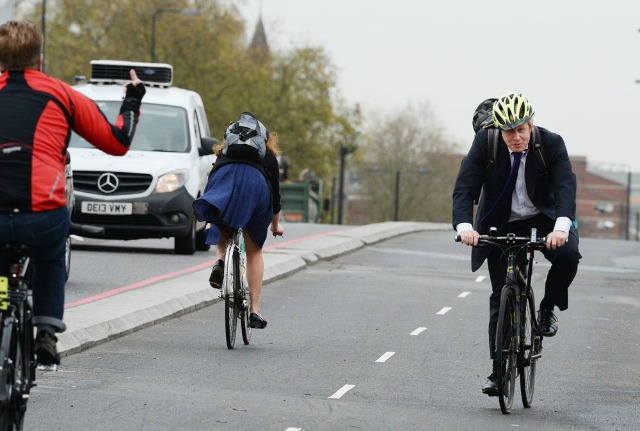
 

It’s all getting ‘A Bit Real’.

So, the world is a scary place sometimes and it’s getting scarier all the time. The rise of the far right and modern Fascism, the Climate Crisis, Coronavirus, the real world is becoming more and more like the fictions we read for a little dark escapism so, what does that mean for those of us who write or intend to write under these circumstances?

Oscar Wilde was a great proponent of the philosophy that ‘Life Reflects Art’, a subject that has long been argued back and forth but, in the end, Art is created by artists drawing on their experiences, opinions and subconscious influences so it’s no wonder that the themes of Dystopia, Eco-Horror and Epidemic are still popular forms for fiction.

Though access to basic literacy in the West is a relatively recent development (Universal Literacy being a development of the las 150-200 years) dissatisfaction with the state of the State or the idea of being oppressed under the Social Elite is not. Since the Dark Ages under feudalism there were the Haves and Have-nots and, had there been access to free-press in the days of the Peasant Revolt of 1381 then we might have seen some dystopian fiction as a result. Although the offices of governance have, at times, gone to great lengths to suppress any accusation of totalitarianism, here in the UK at least, the Miners strikes of the 50’s all through to the 90’s have colourfully illustrated social inequality and perpetuated the hunger for Dystopian fiction.

The Pandemic has been an aspect of social awareness since the days of the Black Death or Bubonic Plague  of 1347. Although the general public were likely not aware of the full scale of the disaster (Facebook and TV news not being a thing back then) the accounts we have illustrate a very real and pervasive atmosphere of terror throughout the affected countries and that has stayed on as part of the social consciousness. In fact, as well as giving rise to the Science-Fiction genre with ‘Frankenstein’ Mary Shelley is also credited with the creation of the Post-Apocalypse genre with her work ‘The Last Man’, published in 1826 in which an epidemic wipes out much of the population (of Europe at the very least) over the course of the latter two of it’s three volumes.

Eco-Horror or Biopunk is the new kid on the block, sprouting from the non-fiction work ‘Silent Spring’ written by Rachel Carson in 1962. Ever since humanity became fully aware of our impact upon the planet to which we are currently tied, the idea that it will, someday, somehow attempt to shrug us off has fascinated writers. The idea that, whether a spontaneous event or something triggered by an errant humanity in it’s reckless pursuit of wealth, an inevitable cascade of events provokes a violent end to the world we know or our species as a whole is darkly satisfying to writers and readers alike.

The current problem for writers and readers of Dystopian fiction is the growing impression that it’s all too possible. When people discuss Totalitarian Dictatorships and Corrupt Regimes the mind often wanders to the Middle East, South America or certain African states. The horrifying realisation that is fast becoming evident is that this style of Demagogue leadership can and does work in Western culture. Not just that, ‘Democracy’ is a fragile system. Gerrymandering (or manipulating constituency boundaries) can ensure a win for the Minority vote over the Majority.

The same is true for Pandemic and Biopunk visions of the future, it’s all becoming quite terrifyingly plausible. So what does a writer of these works do in this climate of rising anxiety? Maybe you want to build an image of hope or the inherent nobility of the human soul. A hard thing to do when images of people belting each other with packs of toilet roll is clogging the screens and the death-toll is rising daily. Acts of self-sacrifice and generosity become less poignant if everyone in your book is doing it and you can’t really have a steady and logical rise of resistance or action in the face of the threat only for all to come to naught. Readers expect certain conventions and conflicts, trial, loss, grief and triumph (well, maybe not always in the last but certainly at times throughout).

I don’t know if I’ve got an answer for you. You can make the disease, the despot or the destruction bigger, badder, meaner. The outcome more inevitable, the eventual triumph more glorious but it is, at this time, more and more important that your work is out there. It’s about giving an example, theoretical though it might be, in terms that appeal to people. A way to be in the face of fear, hardship and uncertainty. It’s about encouraging thought and understanding in a way that prompts people to pay attention, or question what they take as read in an uncertain (and untruthful) world. Though the political, medical and environmental scene might look bleak right now I hope (I have to) that it will get better and, who knows, in five, maybe ten years time the walls between this life and the next might break down, the dead rise and it’ll be the turn of Zompocalypse, Ghost and Demon/Other horror authors to go through this.

Politics, Commentary, Libel and Slander.

Art, be it written fiction, music, canvas or digital print and videographic media is a reflection of life. The creative mind doesn’t exist in a vacuum, artists are inspired by the things they see, hear and read and the questions those experiences provoke. Many of these works seek to provide an escape from the humdrum of the world we know through grandiose visions of far future or fantasy landscapes, others dare us to question our place in our culture or society while still others throw images of what might be in front of us and ask ‘Is this what you want?‘. Art find it’s birth in many places, tragedy, comedy, drama, beauty and horror. As a beautiful image can beget a more beautiful artwork, so a scene of horror and violence begets a darker, more tragic and disturbing fiction.

In the time of the ancient Roman senate politicians would employ street artist to graffiti images on walls, enhancing their own reputations or lampooning their opponents, they’d commission playwrights to satirise those with whom they had disagreements. Art has a long history of political commentary. The Tudors, Henry the 7th or 8th, are believed to have commissioned or doctored images of Richard the 3rd (the last Plantagenet King) to show him as hunchbacked, enhancing Tudor propaganda that Richard was an evil man and a bad King. Shakespeare’s Richard the 3rd holds more Tudor influence to this same effect. More recently art has diverged from the influence of the establishment. The anti-war movement, protests against Vietnam gave birth to a colourful music scene. Punk is all about non-conformism and rage against the inequalities of society distilled from Rock and, at the very least, and influence for Grunge and Rap, giving voice to the dissatisfaction of generations. Satirical Comedies like ‘Yes Minister?’ and ‘The New Statesman’ are as relevant now as when they first aired back in the 80’s and 90’s and, all along there has been written fiction commenting, chastising and warning against the abuse of political power.

Orwell’s 1984 published in 1949, Moore’s V for Vendetta – 1982, Yvegeny Zamyatin’s We – 1921, Burgess’ A Clockwork Orange – 1962, Atwood’s The Handmaids Tale – 1985 and many, many works by Phillip K. Dick. More recently The Hunger Games by Suzanne Collins – 2008, An Ember in the Ashes by Sabaa Tahir – 2015 and many, many others. It’s almost a joke now that writers of dystopian fiction have to struggle to keep up with the everyday horrors of real life, but if you spare a little thought for it, it’s a sobering joke.

So, if fiction is comprised of ‘life through a lense’, where the lens is those unreal aspects of the fictional world (in the works of Terry Pratchett his lens is the Discworld for example) how do we make our statements clear to the reader? In most cases it’s really not that hard. When dealing with big issues like Corporate malfeasance and greed or the abuse of Political or Social station and influence it’s easy enough to make a corporation, politician/political party or wealthy society figure ‘the bad guy’. It’s easy to take inspiration from real life events too.

It’s a known and published fact that medical practitioners and scientists where identifying the link between smoking and lung cancer as early as the 1950’s which led to the introduction of filters on cigarettes even while the tobacco industry as a whole denies and causal link. By the mid-sixties tobacco industry scientists universally accepted the link between smoking and cancer but still the industry as a whole denied it to the public even while regulations demanded the addition of warning labels to the packets. The industry didn’t really publically accept the link until 1998 and the ‘Tobacco Master Settlement Agreement’, basically a pay-off to stop the ongoing lawsuits that had been levied against them.*

So, in a setting that you have created, giving voice to your frustrations and calling-out the injustices of the real-world is something that you can do unhindered. However, I’ve speculated before as to whether Satire still carries the weight it once had. I attended a panel item in Dublin that questioned whether the industrialists and politicians who support and promote the Capitalist Right-Wing agenda even read fiction, let alone fiction that comments upon the nature of the evils, both petty and grand-scale, that they commit every day. So the temptation rises to target the individual, the focal point of the body attacking our liberties, equalities and support mechanisms. When I was writing Dragon Fire I felt that I had to say something about the apparent ineptitude with which the UK was being governed by the conservatives. It helped that my setting was a not-too dissimilar London in places and so I set-up a character to mirror the role of Theresa May, the then PM. Sarissa March (in the book) is a figure guilty of all those things May was at times accused of, a focal point for my frustrations, finally being held to account in a way that just never seems to occur in real life.

That kind of gets to the heart of ‘Why’ we comment on these things and there are a couple of reasons. The first is to make our readers think, ‘Is this what we want?’ do we want the world to be this way, to become this? We warn of what might be if people don’t take a stand. The other (though far less likely) reason is to put this message to these people who we fear, distrust and who have this ultimate authority and ask them, beg them, to take a look in the mirror and ask ‘What have I done? What am I doing? What have I become?’ because, it would seem to me from everything I’ve read and heard that, apart from a fairly specific socio-political section of society, politicians like May, Johnson, Gove, Hunt, Trump and Pence are the monsters they fear. They are the face behind the DWP who have the power and, potentially, the drive to withdraw the social benefits that you rely upon to survive, they are the face behind I.C.E. who might break down your door to drag you away to god knows where. They are lobbying to remove your right to healthcare, work, to even exist in the world. And so it is right in my mind that, via the platform of my work, I try to shame these people and provoke real thought in their supporters about what is being done in their name.

So, if you (like me) are outraged and feel that outrage bleeding into your work there are areas where you need to tread carefully. If your work is contemporary, if your fiction takes place against a modern day/real world  backdrop and you want to call out actual figures (and I do, I really do) then words like ‘Slander‘ and ‘Libel’ start to creep into my awareness. Now, the first is a misnomer for the author, slander is spoken, libel is written and, in fact, what you really want to be thinking about is whether you’re opening yourself up to claims of Defamation of Character. It’s important to state here that, as an author of a work of fiction, you’re very unlikely to be vulnerable to such litigation. Cases of Libel are drawn against journalists who make false report of events or skew facts to sensationalise a story, essentially, lying about the facts. The basis for Defamation of Character suits is based in the intent of ‘Actual Malice’ (although, in the cases I’m outlining, an argument can be made) but, cannot be founded upon someone sharing their opinion. Where you to tie the political figure into a nefarious, genocidal plot, making them the villain you might (and I stress *might*) be open to allegation but doubtful if it would stand in court. You’re writing fiction and not publishing an allegation of actual events, however you can reference validated events or allegations already in the public domain, just as if you were sharing a Tweet, without fear. Likewise, having one of your characters share an opinion of a public figure, company whether or not you share the opinion, whether or not it is malicious, isn’t grounds for defamation.

I think the most important thing, when entering into this kind of socio-political commentary, is not to cause yourself unnecessary stress. The likelihood of the Prime Minister or the President coming after me for things I’ve written in my works of fiction are miniscule (even though Trump has been evidenced to be a petty individual) but, if it’s likely to cause you anxiety, thicken the veil between fact and fiction. Increase the distance between your work and reality until you are comfortable. I’m sure your readers will still get it.

boriszap1

Image: John Stillwell/pa wire Nov 2015


*Ref: Tobacco Explained. The truth about the tobacco industry… in its own words. – Bates & Rowell

Yearly Review – Expectations Achievements and Looking Ahead.

It has been two years since Camelot 2050: Black Knight released so today I’m going to look back at what I’ve achieved and then look ahead at what’s to come. I’m going to start scheduling these yearly reviews to match the timeline of Black Knights release so they should appear around Feb/March time in future.

So, 2019 was a mad year. Worldcon was a massive highlight and having it in Dublin was the catalyst for my decision to go. In future I will definitely be considering travelling further and, as of now, I’m considering going to Worldcon 2021 in Washington (but that’s for the future plans section). I’ve attended a number of literary and film/comic conventions as planned and Camelot 2050 continues to draw new readers to its banner.

I got serious about my new projects following Worldcon. One of them at least was already in planning and another was conceptualised during the event itself so I tend to say that work properly commenced on both around August. We’ll see how they are received by the publishers once they are finished and polished and then I can add some entries to the blog about querying.

I have two Camelot short stories and I’m mulling over what to do with those. They’ve been submitted to magazines and anthologies already but haven’t gained the traction I’d hoped for and so I’m considering creating a few more, either to share here or to put into a Camelot Anthology to appear alongside the Trilogy itself. I might compromise and share a couple then release the anthology a little while later.

Freelance work is in a lull right now but I’m keeping my ear to the ground for upcoming projects. The exciting news there is that Dark Eras 2 (by Onyx Path) has been fully proofed and is headed for release, Contagion Chronicles (at last update) was in layout so, hopefully it won’t be too long before that hits the shelves. As a related note, at DragonMeet this year I brought some copies of Isolation Games Age of Steel and Tormented. Both projects I contributed to and they were very well received so I’ll be doing more of that at the gaming conventions in future.

So, where am I? Two books in the works and looking ahead to the Convention year. This weekend I was back at London Film and Comic Con Spring by ShowMasters and it was a rousing start to my events calendar. I toyed with the idea of MCM Birmingham but think I’ll leave that another year. Still to come though, my years schedule looks like this;

  • Eastercon (by Ytterbium, Birmingham NEC)
  • Satellite7 (Glasgow)
  • Edge-Lit (Derby Quad)
  • Young Adult Literature Convention YALC (by ShowMasters, London)
  • Redemption (Sheffield)
  • Fantasycon (London)
  • Bristolcon (Bristol)
  • Reading Comic-Con (by Creed Conventions, Reading)

I’ll be looking around for some other events to fill out the list but, as it stands, looking forward to another busy year. It’s really encouraging to go to these events and return to some of them and catch up with people, it’s even more encouraging when they share a few kind words about my work too.

I don’t usually talk about sales but, since I wanted to put in something about managing expectations, I’m going to share the current numbers with you. As of LFCC Spring, and Black Knights two-year anniversary, I’ve sold, in person and online, physical and electronic, a little over five-hundred books. Which isn’t bad for a new, unknown, self-published author but it does represent a lot of work. I dare say I could work harder and, no doubt, I will. Current reader-retention from books one to three is a little under a third of the total but I don’t expect people to read them immediately and I hope Dragon Fire and Dark Magic will catch-up in time.

As I’ve said, looking ahead I have two WiP’s to finish and start querying on and more events to go to to build on Camelot’s readership. I joke occasionally about a Netflix show but it is something I’d like to see one day but I’m fully aware that it might not happen or that it might be a wait. The first Witcher short was printed in a Polish fantasy magazine in the mid-80’s and the property had to wait until 2007 for the English speaking world to latch on to it with the release of the translated anthology and the video-game.

So I’ll keep going, if I’m lucky someone with influence in the right circles will read the book and it will spark with them. But, in the meantime, I’m more than happy for my works to reach out to one person at a time and bring them a little joy.

Remember, making a living out of art might make you successful, but bringing joy to one person makes you a success.

Pancakes (and Crepes and Flapjacks -oh my!)

CW: Some coarse language

Yesterday was Shrove Tuesday and (in defiance of the Christian celebration) we went out and bought eggs and flour and fillings and made pancakes and that is the origin of this blog post which, as a change, I will endevour to keep light.

You see it got me thinking, I talked in a previous post about stereotypes and how they can be a tool to give a reader a quick-reference introduction to characters when used responsibly but this can also apply to dialogue, what words a character uses and how they use them. It’s another dimension to character building and another way to give your story colour and depth so, let’s look at that.

What the English term a ‘Pancake’ our French and American friends (plus many others) would term a Crêpe. However, owing to the long and antagonistic relationship between the English and the French (and despite the myriad French terms we do use), we would never dream of calling the thin, flour-based things that we eat on Shrove Tuesday a crêpe because, to us, it’s a pancake. It’s a cultural oddity. In the US a pancake is a much fluffier griddle-cake often eaten at breakfast with maple syrup and bacon or any number of toppings. But, in Canada and certain states those are called Flapjacks a word which, in England, commonly refers to an oat and sugar based snack.

So, as you see, the words and terms a character uses in English alone can give a fairly clear indication of nationality and/or location of origin. In keeping with the ‘food’ theme it’s becoming increasingly well known (via the medium of memes) that, in England there are numerous regional terms for a simple bread roll. Bap, batch, barm, bread cake, lardy cake or cob to name a few. Initially I thought that what an American would refer to as a ‘biscuit’ was a simple bread roll but I was wrong, in fact those biscuits (as served with ‘gravy’ but I’ll get around to that) have more in common with the English Scone than with a simple bap. Now, it surprises a lot of English people when they first encounter American gravy because it is pale, almost white, unlike the brown we are used to at home. I can only reason this is because of the added egg/milk aspect dependent upon recipe. Now, while most of us Brits use instant powder to make our gravy (adding the juice of whatever meat cut we’ve cooked to serve with it) to make English gravy from scratch entails using blood which provides the brown colour.

Of course I’ve also referenced ‘Biscuits’ which in England refers to what Americans call ‘cookies’ (although we have cookies too but they are a sub-form of biscuit) and the list goes ever on. Stepping away from foods to more general use words and contractions one that springs to mind is ‘Y’all’. Instantly the speaker is identified as coming from the Southern American States. ‘Blimey’ – English, probably from London. ‘Crikey’ – Australian and so-on.

English spelling, within the manuscript as a whole, is majoritively determined by the origins of the author. However with the rise of text-based communication and email (but also if you want a written letter to appear in your text) it’s the origin of the character who wrote it that matters. As I look through this draft I see, underlined in red, words I know to be spelled correctly but, as an American site, WordPress spellchecker uses the Webster dictionary as opposed to the Collins or Oxford equivalents. So, if you’re writing in-draft letters between American and English characters be mindful of color/colour, honor/honour, armor/armour (we have extra ‘u’s) and organized/organised, realized/realised and civilized/civilised and the dictionary alone knows how many other differences in spelling.

If you’ve a mind for detail this can stretch down as far as interjections. Those little non-words that denote a simple sound. Mostly they can be applied universally, huh, uh-huh, eww, urgh but in one particular case I can think of they can be applied specifically and indicate a characters nation of origin. Using ‘eh’ as in inflective of a question at the end of a sentence is something that I believe (and do correct me if I’m wrong) characterises UK English (including Irish and Scots) and Australian English but, in most instances would be used to denote Canadian English. It’s another of those stereotypes for better or worse.

Of course, with the internet and sky/cable TV and many other influences, some particular terms are in decline. ‘Lorry’ and ‘Rubbish’ are being overtaken by ‘Truck’ and ‘Garbage’, ‘Cab’ is losing ground to ‘Taxi’ and ‘Taxi’ is losing ground to ‘Uber’ and this is because language is fluid and ever changing. When I was at school ‘cool’ was fighting a losing battle with ‘wicked’ then, more recently, ‘safe’ hit the scene. My brother (an avid, online gamer of the old school) shared an anecdote with me of how, many years ago, he was gaming with his group, mostly Americans, late one night in the mid-to-late 90’s, and he happened to, in jest, call one of them a ‘wanker’.

“What is a… wan-kar?”

Was the bemused reply. The voice chat audience was in hilarity that this quaint English word (that some had heard but none knew the meaning of) was an equivalent to their ‘Jack-off’ of ‘Jerk-off’.

So, as with using words to build a scene or set an atmosphere, using the right terms and words in a characters dialogue, gives them a greater depth, makes them more characterful and memorable. As much as what they say, how they say it and the words they use give them another dimension. And this doesn’t just apply to English it’s just the language I know best.

What Can We Believe?

Don’t worry, today’s blog isn’t about theology or philosophy, I’m not going to attempt to answer any of the Big questions (not at 9am after only one cup of coffee anyway). No, today I plan to talk about ‘suspension of disbelief’ and when and where you can push it.

The wonderful thing about writing Fiction, Fantasy or Sci-Fi is that, to an extent you’re excused from ‘real life’ and expected to exercise your imagination for the entertainment of your readers. They expect it, they want it but, for all that creative freedom there are certain areas where readers tend to be more skeptical than in others.

Luckily, settings isn’t one of them. Whether you create a far future tech-scape where individuals broadcast their minds into temporary, loaner bodies and manipulate everything from cars to coffee-makers from the comfort of their homes or an expansive fantasy world where kingdoms sit atop mountains and travel is by means of magical cloud-ships of domesticated, eight headed-dragons there are few realms that the readership won’t accept. As long as there is a means or a character they can identify with who views and interprets the world in  a relatable way you can go to creative town on the setting.

Societies and civilizations. Here, again you have great deal of freedom and even historical precedent to draw on. You can justify just about anything be it Utopian, Dystopian, Socialist oriented or a Fascist Dictatorship that, somehow, works. Just recently I’ve noticed changes in a certain property. Star Trek (Gene Roddenberry, 1965) has always been a vision of acceptance, tolerance and co-operation to me. Threats to the Federation are, by and large, from external sources and it’s through unity that the various crews overcome the clear and present threat, it’s an ideal. However, recently those responsible for the direction of the franchise have chosen to present cracks in the futuristic facade. Self-interest, rogue security branches, and a number of ethically questionable activities from within Star Fleet are becoming more acceptable and I can’t help but wonder, is that simply a response to the direction Game of Thrones (George R.R. Martin, 1996) and it’s television adaptation, has steered audiences in? It’s an interesting question, whether the audience influences the material by consuming certain types or whether the material influences the audience by showing them something they didn’t know they wanted. Very much a ‘chicken and egg’ discussion.

I’ve found, through my own experience of reading and writing, that, the closer you get to individual experience the more critical the audience becomes and that’s good. So, when it comes to plots, politics and general scheming it’s important to remember that, no matter how high or far-reaching any plan starts with an individual. Now they may be planning on behalf of a nation, faction, kingdom or planet but the initial idea and it’s motivation start at the individual level, for super villains and despots this is fine. Depending upon where it goes from there you have opportunity to twist and pervert the original aim. Any study begun by a well-meaning scientist can be weaponized by a military power or exploited for profit by an evil corporation. The thing with plans and schemes is, while you want them to be at least slightly convoluted and misleading, you want that red-herring moment of ‘Aha! Fooled you!’, it still needs to make an amount of sense, whether logical or not. For Camelot 2050 I used the explanation that Morgana le Fay is over fifteen centuries old, her frame of reference for what is logical is nothing like ours and, as a concept, ‘the value of human life’ now means almost nothing to the villain. That alongside her egocentric and overly dramatic persona allowed me to employ some truly monstrous plans and re-interpretations of military strategy but, I’d argue, that it was always a case of the plot driving the narrative and not the other way around.

So, now we come down to reactions to stimuli at the individual level. As a reader I  don’t tend to put books down, not to say I haven’t but it’s a rare occurrence. I remember that I never finished Fatherland by Richard Harris, and I’ve yet to get more than a third through one of the many books about the Gallipoli campaign. Not through any fault of the authors, maybe I find them a little dry and heavy for my tastes but I like to think I’ll go back to them one day. But, there have been a couple of instances recently where I stopped reading because I either didn’t believe the interpretation of the characters presented or didn’t believe the characters reaction to stimuli. Much as there are ways to manipulate your characters and their responses to a given situation it’s important that they stay in character. Often I’ve groaned aloud because a character I love does the wrong thing because, given the situation, it’s what they would do, and there are pages, in some cases books, of established behaviour patterns to support that action. Where it comes to a character doing something infinitely stupid on the barest reasoning and acting contrary to their established personality, I’m afraid that’s a deal-breaker.

At the end of the day there can be any number of rocket-powered dragon-flamingo’s within your pages and the readers will love it, make meme’s and buy merch but, if you lose sight of your characters personalities and motivations then you’ll lose your readers. It’s within the details of characters reactions, interactions and responses that suspension of disbelief is held most tenuously (even though you can probably find stranger/more outlandish real world stories on the internet).

Blog Index

Writing

The Journey Begins

Where to Start? – A little about me and where I started my writing journey.

The Big Question – Why? – Why did I become a writer.

When… are we going to talk about Criticism? – Receiving and dealing with criticism.

Let’s leave the real world behind for a moment. – Talking about Camelot and the wider world within the pages.

Influences, where does Camelot 2050 come from? – The sources that inspired Camelot 2050.

Stereotypes, Coincidences and Cliches. – Commonly employed shortcuts and when not to use them.

The Waiting, oh God, the Waiting. – The biggest frustration in writing, waiting.

Mixing it up, Content. – What you include in your writing, why and how.

Choreography! It’s my jam! – Advice on how to write fight scenes and general physical interactions.

Where do we go from here? – Launching into new projects, preparation and planning.

Where Physics and Fiction part ways. – Real-world physics for Sci-Fi writers.

Write what you know, learn what you don’t, and then write that too. – Representation, know what you’re writing.

Catch and Release, your work in the public domain. – What to expect once your work is out in the public domain.

Cursing the Void (or ‘Swearing in Science Fiction’). – Some thoughts on Sci-Fi language, especially the bad kind.

It’s a big ‘verse out there. – Building a diverse and functional universe.

What is Love? (Baby don’t hurt me!) – the diverse nature of relationships.

The Process, writing about writing. – How I go about my craft. Routines, daily goals and deadlines.

Let’s Talk About Sex, Baby! – Sex in literature, where and why is it relevant, (content warning, Mature themes).

Writing and How… – More thoughts on how to prepare and execute the writing process.

Originality, is Anything new Anymore? – How important is it to be original?

Young Adult to Adult, the difference is? – Trying to draw the line between adult and young adult literature.

Blurring the Lines – Life influencing art, (Content Warning, Politics).

The Mundane to the Metaphysical, – Fantastical stories set in a mundane world.

Characters and what makes them Memorable. – Crafting characters the audience will enjoy.

Sex Positivity in Literature. – Stepping out of the mold of ‘shameful’ or ‘titillating’ and being positive about sex, (Content Warning, Reference to sex, sexual content and sexual abuse).

Self Criticism and how it can help you. – Reading your own work, recognising your own flaws and being okay with that.

Trials and Tribulations aka Escalation and the Fall. – Pacing and building up to the climax.

Grist to the Mill – Using your own experiences to inform your writing, (Content Warning, Politics).

Writing in the Dark – Horror and Suspense in Literature. – How to manufacture a fright.

Dracula – Dead but still Evolving. – How older stories remain relevant in the public imagination, Content Warning, reference to rape).

Introspective, Circumspective & Retrospective. – Building on characters via their perceptions.

What Can We Believe? – Suspension of disbelief, where and when to stretch it.

Pancakes (and Crepes and Flapjacks -oh my!) – Language, regional and national differences (not an exhaustive list).

Politics, Commentary, Libel and Slander. – Art as influenced by life, socio-political commentary. How and Why.


Format, Layout and Self Publishing

How can you do what I do? – Tips on how to get started with your own writing/publishing.

Is this In-Format-ive? – Layout and Format, preparing your work for self-publishing.

Editing and Layout Revisited. – A more detailed dive into Editing, revisions, language and layout.

Self vs Vanity Publishing. – What to look for in a self-publisher and how to avoid getting conned.

First Impressions, Cover Art. – How to go about making your final product eye-catching and where to look for cover art.


Querying and Submitting

What’s going on in the Realm of the Written Word? – Changes in the way Publishers interact with writers and how to improve your chances.

Sharing is Caring (Although it might not feel that way). – Querying, sending your work to publishers and how to go about it.


Exhibiting and Conventions

The Show must go on. – Getting into the trade-show circuit.

A Series of Promotional Events. – How to go about running a stall at events.

Attending Conventions for Fun and Profit. – Picking shows to attend and how to go about it.

There’s a World(con) Over the Horizon! – Preparations for attending the Hugo award hosting Worldcon in Dublin 2019.

Another Brief Update (with Pictures!) – More Worldcon updates with examples of promotional merchandise!

Paneling at Conventions – What to expect on the panel circuit, talking in front of an audience.

So, that was Worldcon Dublin 2019. – Worldcon in review.


Freelancing

Writing for Pay – Freelancing 101 – Things to remember when writing under contract.

Writing Games. – Writing for tabletop or computer games.


General Advice/Miscellaneous

Be Kind To Yourself. – Self-care for writers.

Part of the Community – Reaching out into the wider world of writer and writing.

Technology is your friend… until it isn’t. – Technical hitches and how to avoid them.

Working against ‘The Block’ – Dealing with writers block.

It’s All About Me… – Writing a bio for your work.

Let’s Get Real – Managing expectations.

And Now, The End is Near… – Finishing long-term projects, what to expect and how to deal with it.

Staring at a Blank Page. – A little more advice about dealing with writers block.

A Year in Review (two months early). – Looking back over things at the progress I’ve made.

No More Camelot? – Broadening my horizons.

Cycles and Routines – Behaviour patterns I’ve recognised in myself, dealing with procrastinating.

Yearly Review – Expectations Achievements and Looking Ahead. – Where I am and where I’m headed.

Introspective, Circumspective & Retrospective.

Today I’m going to share some thoughts and opinions about the different perspectives we, as writers, can use to develop our characters through their views, observations and backstories and my own experiences of using these tools in my own writing. So I’m going to be talking about characters looking in, looking around and looking back.

It doesn’t matter if you’re writing in the first or third person about one or a number of characters. At some point it will be come relevant to the story to share a characters inner thoughts when they contradict, enforce or justify their words or actions.

Introspection – sharing a characters own hidden thoughts about another character, a sequence of events or an upcoming event in the narrative is a good way to build the readers familiarity with that character, sharing their motives and emotions to build reader/character rapport. The stumbling block (and one my editor pointed out to me during Black Knight) is that too much of it, or too lengthy a chunk of it, rather than help build that reader/character relationship, gives the impression if self-centered navel-gazing. So, unless there is an important reason for the character to be indulging in deep thought introspection can be achieved via the medium of a second character, a sounding board for the primary or a prompt for the thoughts they’re having. My advice when entering into a section like this is to keep it concise and, if possible, break it up with secondary character interaction.

Circumspective – there is a genre that used all three of these types of perspectives and it has become a defined trope of that genre. What am I talking about? I’m talking about Noir. Whether on the page or on the screen the main character (likely a grizzled Private Detective) will indulge in a persistent internal dialogue sharing thoughts and impressions of the people and places around them. Looking around at events and clues is the process for crime and noir stories and it’s a good place to go for reference if you want to develop your own style in these areas. The thing is, you don’t have to go out and pick up The Maltese Falcon, The Postman Always Rings Twice or L.A. Confidential. Aspects of Noir have been adopted into other genres. Urban Fantasy for a start, The Dresden Files (Jim Butcher) is noir/detective fiction with wizards and monsters, Terry Pratchett’s Guards series withing the fantastic setting of the Discworld shares elements of Noir. You can build impressions of how knowledgeable, observant or practical your characters are and also share some of their opinions about a multitude of societal or political subjects through these observations but, once again, being sparing is key.

Retrospective – now, I don’t know about you but, sometimes I get frustrated by how clean and clear some characters thought patterns are. In my life a good percentage of my retrospective thoughts are random invasions of that really embarrassing thing I did that time in primary school or how I made an ass of myself that time/those times. But there is a reason for this too. As writers we want to keep our stories concise, we don’t want to pad out page-count with things that aren’t relevant so, as much as the hero might have a flash back to that time she fell on her face running track at school, I (the writer) am not going to include it unless it’s plot-relevant. However, the past intruding on the present is an important influence in anyone’s life and that’s no different for characters in a story. While, in a way, they come into being at the start of the book and end with the final page we don’t want the readers to really believe that. They should have had a life before and have goals for the future. In those sections where you use either introspection or circumspection there’s an opening for Retrospection, sharing why the character feels this way, what caused their bias or gut reaction. It doesn’t have to be more than a line or two and it doesn’t have to be explained fully. Having those tantalizing hooks for readers to theorize about is one of the joys of fandom and another is when, later on, those throw-aways are fully explored. One that immediately comes to mind is Jack Sparrow (Pirates of the Carribean – Disney 2003) off-hand commenting “And then they made me their chief!” It was a tantalizing line from the characters past that wasn’t fully explained until PotC At Worlds End in 2007. Referencing a characters past makes them more ‘real’ to the reader in that they had a life outside these pages and, whether it is throwaway line or a full-blown flashback sequence this kind of character development (when narratively necessary) should definitely be taken advantage of.

So, whether your characters are looking in, looking out or looking back remember that the most important time for them is the now and, whilst these perspectives help inform the reader about why a character does whatever they do and helps them ‘get to know’ your cast you don’t want to get lost down the rabbit hole of unfolding the characters entire psyche. On the flip-side a character who never shares their thoughts with the audience loses dimension and becomes little more than a feature of scenery in their own story. Books allow us to be in the characters heads and feel what they feel, some may argue that’s an aspect that is lost on screen but remember, body-language, expression and tone of delivery convey more meaning than simply the words themselves. A person doesn’t even have to speak before we start building a picture of how we think they’re feeling. So, go digging in your characters thoughts and past experiences, build them up and, while you might not use everything you come up with, it will help inform their actions throughout the story.

Dracula – Dead but still Evolving.

CW: Reference to rape.

I said, very early in these blogs, that I didn’t want to do reviews. Much as I have my own opinions of various creative works I don’t feel it’s my place to bias any of you as to what you should and shouldn’t read or watch. I’m not a reviewer, I’m a writer. That said I do want to share some thoughts about the recent BBC adaptation of Dracula with you as a means to explore basing your work on a pre-existing material. These opinions are my own and suffice to say spoilers for the show below.

I should start by giving you some grounding on my own interpretation of ‘vampires’. I’m not one for the dark, brooding, romantic, lonely wanderer type. The legends of vampires, to my mind, are cautionary rape tales where the central figure is one of power and influence, using their charm and position to take sexual advantage of others lower placed in the social food-chain. The ‘Lord of the Manor’ or some such, having their way with the staff or, in more recent years, producers or celebrities using their position to their own depraved ends. Vampires are monsters, not love-lorn loners in my mind. The vampire mythos and warnings therein still apply in our modern world but, with the bravery of those involved in the #MeToo movement I would hope that’s changing.

The Dracula story has seen many interpretations, from the Hammer Horror movies of the 50’s, 60’s and 70’s to things like Vampire in Brooklyn (1995) starring Eddie Murphy. My personal favourite is still Bram Stoker’s Dracula (1992) with Gary Oldman in the titular role and, while other vampire based media has taken the bare bones of the legends and spun their own story around it, producers and script writers return, again and again to the Bram Stoker story and Dracula himself. So, now we move on to the latest BBC adaptation and some thoughts/comparisons of the telling itself.

The BBC’s Dracula (2020) is a three-part dramatization developed by Mark Gatiss and Steven Moffat. Both have written for Doctor Who and have a wide range of other credits between them spanning drama, comedy and Sci-Fi. The show starts from the point of view of Jonathan Harker, a very familiar character in Dracula lore, but here he is telling of his encounter with Count Dracula in a convent under the watch of Sister Agatha Van Helsing. This is the first important divergence from the original where Van Helsing was an aging professor of disorders of the blood and Harker didn’t meet that character until he’d escaped Dracula’s castle and returned to England. Some might rail against the gender reassignment of the character but to me the gender of Van Helsing (or any other character for that matter) is not as important as the character’s portrayal. When Katee Sackhoff was cast as ‘Starbuck’ in Battlestar Galactica (2004) it didn’t matter to me who they cast as long as there was a certain faithfulness to the character as portrayed by Dirk Benedict in 1978 and, in Dracula, the performance of Dolly Wells in the roll is one I find no fault with. She manages to conjure impressions of Anthony Hopkins, Christopher Plummer and even a little Mel Brooks from time to time and she is immensely entertaining to watch.

As Harkers account develops we see Dracula take advantage of the young lawyer, not only enlisting him as a kind of tutor on the ways of society and style in London but by draining the mans blood to restore Dracula’s own youth. Rather than some kind of mesmerism the approach Dracula takes is more akin to gas lighting, the darkness of the castle making the passage of time hard to track and Harkers own frailty from increasing blood loss and the growing influence of Dracula over him playing into that process. I’ll insert a brief note about the interpretation of the Harker character here. I wouldn’t be so bold as to assume that the screenwriters were representing an abusive relationship between Haker and Dracula but it does appear so to me. Harker presents as a timorous individual, even refers to himself as ‘just a lawyer’ when the Count suggests tutelage in the ways of modern society. It takes a great deal of trauma and a clear presentation of the Counts dire intent and nature involving a baby to give Harker the determination to leave.

Another bold step away from the usual form comes in the interpretation of Dracula’s ‘Brides’. So often used as a means to titillate the audience (as in 1992, with Keanue Reeves under direction by Francis Ford Coppola) the brides in this adaptation are presented not as glamorous vampires themselves but as Dracula’s experiments toward propagating his species. Beyond that, later in the episode Dracula refers to Harker, saying he might be ‘my finest Bride yet’. The dialogue smashes wide the arbitrary gender assignment of a four-hundred year old creature (Dracula can no longer be described as ‘human’) who, up to this point, has only passed on vampirism by an act much removed from (but still reflective of) sexual intercourse.

In this telling Harker escapes before Dracula leaves for England and so the Count follows him to the convent and this is where there is something of a dialogue masterwork between Dracula and Sister Agatha. The two actors riff, like fire and ice, the dialogue is punchy and combative in a playful way. It’s very much a meeting of minds and a testing of resolves. Dracula, from his human origins as a warlord of Walachia and as a noble of darkest Europe in the late Victorian era obviously doesn’t much expect such astute observation from a woman, let alone a nun but when faced with its existence he revels in the challenge irrespective of its source.

I’ve yet to touch on the presentation of Dracula himself and it is a different characterization to any I’ve seen. The aesthetic of the character quickly changes from a ragged and elderly man to a Bela Lugosi-esque presentation that did give me quite a smile but, beyond the visual this Dracula stepped away from the quiet and cultured, sinister figure to a rather bombastic and overbearing, East-end diva completely assured in his own superiority whether that be intellectual or physical. Whenever the character finds himself stymied he revels in it turning it into a scene within the scene. He plays the characters within until their own human nature swings the balance back in his favour.

The first act of this three-piece is as much about establishing that this is a different take as it is about introducing the characters we are already familiar with and that’s a lesson we all can learn when basing new material of existing stories. Even with Agatha, she’s a nun, but she’s also Van Helsing. The concept is introduced and we swiftly move on. Act two is, in my opinion the best installment. It deals with what happened on the Demeter, the ship that bore Dracula to England and an instance often overlooked in subsequent re-tellings. Here the scriptwriters indulge in a rather fun ‘Death on the Nile’ inspired mystery where we all know who’s responsible but the cast do not. Despite the fact that the audience is well aware of what’s going on the writers hold to spinning a narrative around the disappearances on board and the mysterious ‘passenger in cabin nine’. It’s so very reminiscent of both the old mystery novels and certain more modern formats like Slasher Horror or even The Thing and it works. Alongside this narrative the Count is telling Agatha of the events aboard the vessel and the two blend together in a way that is ultimately very gratifying and, at least in my case, rather unexpected (admittedly I never was good at ‘Who Dunnit’ mysteries).

At the end of part two Dracula comes ashore and is bathed in light from a helicopter and surrounded by Range Rovers and personnel armed with modern assault weapons. He’s also confronted (apparently) by Agatha Van Helsing in modern clothing and she calls him by name. This is a compelling cliffhanger and a clear indication that this is no longer the Dracula story we’re expecting, having stepped on from Victorian England into the modern day, but is it? What we get is almost the story as was, characters like Lucy Westernra, Doctor Seward, Quincey Morris and Renfield appear but, in different guises. Lucy is a social media influencer as well as being a party-girl; Renfield is Dracula’s lawyer and argues with the Harker Institute over the vampires ‘human rights’. There are many changes to the original but also many similarities too. The commentary at play is also undeniable. Dracula sits in the living room of a modest home and states ‘I knew the future would be full of wonder, I didn’t expect it would make them ordinary’. Lucy is cremated rather than interred and, upon rising and at the climax, when shown her true, now burned face she begs Seward to kill her despite Dracula’s assertions that she is still beautiful. At the very finale, Dracula ends the life of Van Helsing (now a merging of Sister Agatha and her descendant, suffering cancer) as an act of mercy and then drinks her blood as a means to end his own existence. It’s a subversion of the form that still holds enough in common with the original story. This isn’t, as such, a review but my feeling is, for all its clever twists the third act comes across as quite shallow. That may or may not be more of a reflection on it’s setting than its story.

This BBC interpretation of Dracula is, in my opinion, a very useful example for writers who intend to revisit existing stories. Many of the differences and changes work while still staying true to the work of Bram Stoker. So often trying to re-imagine or reinvent existing stories or properties can draw negative reaction from the fans of those existing works. In my experience the ones that succeed are those that keep true to those works while still establishing a character of their own. The differences that set a work apart from its inspiration can make it, or break it and it can be the toss of a coin as to which is true.

Cycles and Routines

Hello again everybody, so today I wanted to talk again about how you write and share a little about my own cyclic behavior when it comes to my own creativity. I don’t know if you’ll identify with this but maybe it’ll help and reassure you in regards to some of your own experiences of writing and creativity.

Many people I’ve talked to about writing or creating have said ‘I just can’t seem to see it through’ meaning that they lose interest in the work they’ve done, file it away and never go back. To me, I’ve found that, rather than a hurdle or a wall this is part of a repeated cycle that I go through from time to time. Writing is a passion for me, but like many passions it’s hard to be passionate all the time. I’ve discussed in these blogs about renewing yourself from time to time and, simply put, if your interest in your work starts to flag then it’s time for you to renew your creativity.

For myself this falls into a predictable pattern and it’s one that I’ve found I can pursue while writing. I read, I watch movies and I play video games. The cycle often falls in that order too. I often joke that my ‘to read pile’ has simply transformed into a ‘to write pile’ but I do still read and I have a few titles to work through yet. Currently I’m reading Tom Holt, ‘An Orc on the Wild Side’ alongside ‘The Walking Dead Psychology’ by Langley. I have Hugh Laurie’s ‘The Gun Seller’ lined up as my next read, whether I get that far before the cycle turns is the question though.

There’s a couple of shows I’m working my way through at the moment, ‘Titans’ and ‘The Witcher’ to name two. They tend to play in the background as I write but, if my attention for the WiP flags I’ll sit and pay them my full attention.

Gaming is something I dip into from time to time. With my recent work it’s as much research as anything else but games now have easily as much narrative contained within them as any movie or other work of fiction so it pays to pay attention. If I’m just looking to recharge my batteries then I opt for simpler games, ‘World of Tanks’, ‘Friday the 13th’ or ‘Dead by Daylight’. Simply round based games where I can have a crack at it and pull out as soon as I want.

I also picked up my guitar for the first time in years. I’ve got to work on rebuilding my calluses but it’s great to be playing again. Writing is very much like learning an instrument, it takes time and routine. Practice, getting your butt in the chair and doing it. Inspiration comes and goes but building routine keeps the flow alive.

Many of you have day jobs and don’t have the time to do all this but keep in mind. If your impetus to write tails away don’t be tempted to ‘replace it’, or don’t think of it like that. Instead accessorize it, find a companion activity that renews your creativity. Exercise is also a good outlet, there are a million things you can do besides your primary creative outlet. I resisted exposing myself to other creative works for a long time, I worried that they would dilute my contribution to my own work by drawing the influence of others. Sometimes it does but I’m aware of the influences so can avoid anything being too similar. Most times I even cite my inspirations to people I’m discussing my projects with.

So, stick with it, renew yourself and find other activities that feed your own creativity. Hurdles and walls might spring up but acknowledge then and realize that they don’t need to stop you permanently. If you’re distracting yourself acknowledge that too, it’s not bad, don’t beat yourself up for ‘procrastinating’ but realize that it’s a necessary part of the creative process.

Keep going and good luck.