Blog

Divided We Stand?

You will often hear me saying that “Other writers aren’t competition.” and this, by and large, is true. The pool of readers among whom we disseminate our works is vast with wide-ranging tastes and, in the majority, someone who reads Adrian Tchaikovszy’s work isn’t going to snub Gareth Powell or Kameron Hurley simply because they aren’t Adrian Tchaikovsky.

But, there are divisions in the industry based upon genre and your likelihood of getting published and how you get marketed after publication can depend upon how you phrase your pitch, for example;

Sci-fi/Hard Sci-fi/Space Opera
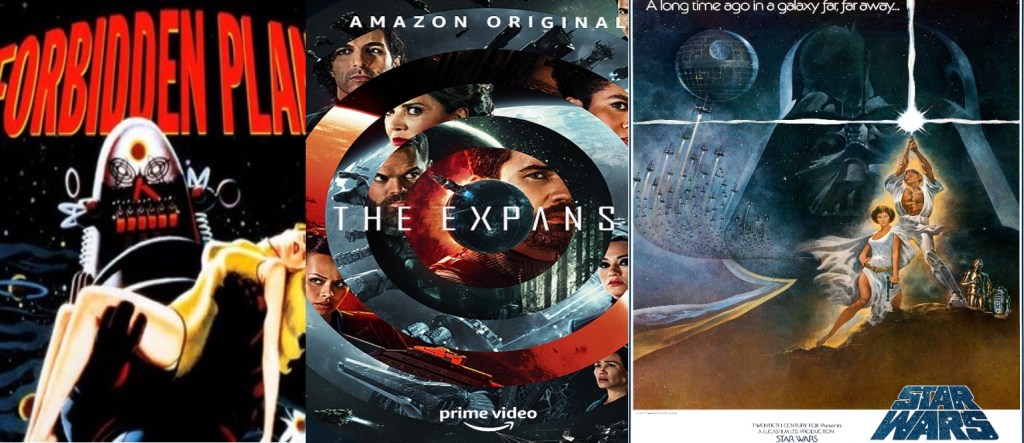
Forbidden Planet (1956, Warner Bros), The Expanse (2016, Amazon TV), Star Wars – A New Hope (1977, 20th Century Studios)

The differences in these cases can almost be dialled down to… Something Happens in Space, Something Happens in Space – There is Maths, and A Big War Happens in Space – Cue Chivalry, Romance and to Hell with the Laws of Physics.

Of course, securing a breakdown of specific information is quite an involved web search but, while WordsRated.com has the U.S. Market for Science Fiction (combined with Fantasy) accounting for nearly Six-Hundred Million dollars (domestic) they also state that less than 5% of authors make a living from writing alone.

Both Science Fiction and Hard Sci-Fi can be regarded as trying to retain a certain amount of realism (whether there are aliens or not). Star Trek (1966, Gene Rodenberry) frequently straddled the line between Sci-fi and Space Opera but the difference between ‘Hard’ and ‘Soft’ science fiction is the attention to detail. Theoretical Physics, Mass-Velocity Calculations, actual maths in application and, make no mistake, there is a massive market for it. However, more and more the lines are blurring back into each other. You can have a massive, over-arching space war with romance arcs, seat-of-the-pants and ventures *and* realistic environments, theoretical biology’s and the application of astrophysics.

Horror and Humour
Innsmouth Literay Festival Banner, held 30th Sept 2023 Bradford UK

In my experience of the industry to date I have come across certain attitudes towards several genre’s (at least one I won’t go into for fear of the readership) but in the case of Horror and Humour I certainly feel there is a strong division from the Sci-Fi/Fantasy market. That’s not to say that many, many titles don’t include strong aspects of these genres but, if you push too hard, if your book is too funny, or too horrifying, then you risk getting bumped out of Sci-fi/Fantasy and into Horror/Humour and therein there are risks. Books marketed under the ‘Purely Humorous’ will struggle to find a publisher because humour is so subjective. You’ll find that the majority of authors of successful humour are established comedians themselves wherein people already know what to expect, an unknown is unlikely to sell. Within Sci-Fi/Fantasy, humour is often seen as a ‘poor cousin’ at least by the bigger publishers, which annoys me as I loved the Myth Inc and Phule’s Company series’ by Robert Asprin and, I’m sure, comes as a huge surprise to New York Times best-seller Jasper Fforde. Horror is widely regarded as its own genre, in 2018 a ‘boost’ in sales up to Four-Million Dollars was seen as a domestic ‘win’ for U.S. publishers but, when comparing this to the Sci-Fi figure stated above we should remember that Fantasy and Comics had been included and also (for some strange reason) Steven King counts in the WordsRated list of Top Ten fantasy authors of all time. No I’m not forgetting the Dark Tower but I do wonder if his sales to date have accounted for his vast catalogue of pure horror for the purposes of that analytic. In fact, for the longest time, Horror hasn’t had its own UK dedicated literary convention, getting lumped in with the (admittedly fabulous) more generic Horror fandom conventions. This year marked a change as the Innsmouth Literary Festival marked its inaugural event and, I’m sure, we look ahead to a bright future for that convention and the representation of horror literature on the UK convention scene.

‘Why is it important how I’m marketed?’

Well, the vast majority of readers are very canny; they will identify your book probably as you intend it to be identified. They are open to the representation of subtle sub-genres and genre-mashing. And it’s not that the industry isn’t, so much, it’s just that they like to tick boxes. Focussed marketing is widely believed to yield the best returns for financial outlay; broad-spectrum marketing is a much less desirable cost/return gamble. So publishers like to pigeonhole titles to trigger keyword searches. It doesn’t matter so much in Barnes and Noble, all the Sci-fi goes on the sci-fi shelf, but the physical bookstores account for less and less of the Publishers income every year.

“So Why Don’t They Just Broaden the Keyword Range?”

Another reason for Focussed Marketing is to mitigate damage, the Publisher doesn’t want a title falling into the wrong hands which, for the purposes of this argument, is anyone who’s going to take to Amazon/GoodReads/FaceBook etc and leave bad reviews and bad reviews kill books. That’s not to say that good reviews can’t be damaging too. Too many glowing Five-Stars and people might start to suspect some foul-play; I’ve certainly happened across the ‘Reviews for Cash’ scene, people selling reviews from themselves and their followings. Still, I’m pretty sure the sales execs don’t see it that way.

As I’ve often said, the way to succeed (if not what would widely be considered ‘success’) is to find those readers who will enjoy and value your work for what it is. The surest way to do that is face-to-face sales and accurate representation of your work when marketing. That’s not to say that you can’t cast your keyword net wide but your blurb will be the first thing that comes up in that search so, if there are wildly differentiating elements within your story, you have to be upfront with that. Currently I’m in collaboration on a story that interweaves High Fantasy, Cyberpunk and Post-Apoc settings, that’s going to be an absolute ‘joy’ to set the marketing for!
Banned Book Week! (Oct 1st-7th, 2023)

The Anarchist Cookbook by William Powell first appeared on shelves in 1971, it has since been the target of ongoing attempts to have it banned or removed from circulation, even by Powell himself. It is sometimes cited as a pinnacle moment in Counter-Culture, a step-by-step instruction manual on the manufacture of explosives, improvised telecommunications and drugs. Possession of the book in the UK has been used as grounds for charges of ‘Possession of Terrorist Information’ under the Anti-Terrorist Act and (although few prossecution based soley upon it’s possesion have gained any ground) the book has, in fact, been linked to numerous terrorist attacks since its publication. But should it be banned?

On the one hand, the Authorities are concerned that a title such as this allows untrained individuals access to knowledge of dangerous substances that pose risk to life, health and property, both their own and others. If it’s removal from circulation saves a number of persons from accidentally blowing themselves to bits or overdosing on contaminated drugs then that’s good, right?

On the other hand the Authorities have a grounded fear that this book, in the hands of an educated and forward thinking populace, equips people with the means and knowledge to fund and defend themselves against Totalitarian Aggression and Exploitation by the Ruling Classes. Can’t be handing the oiks tools with with to educate and defend themselves, can they?

But what’s the right answer? *Is* there a right answer? Only if you ask the right question.

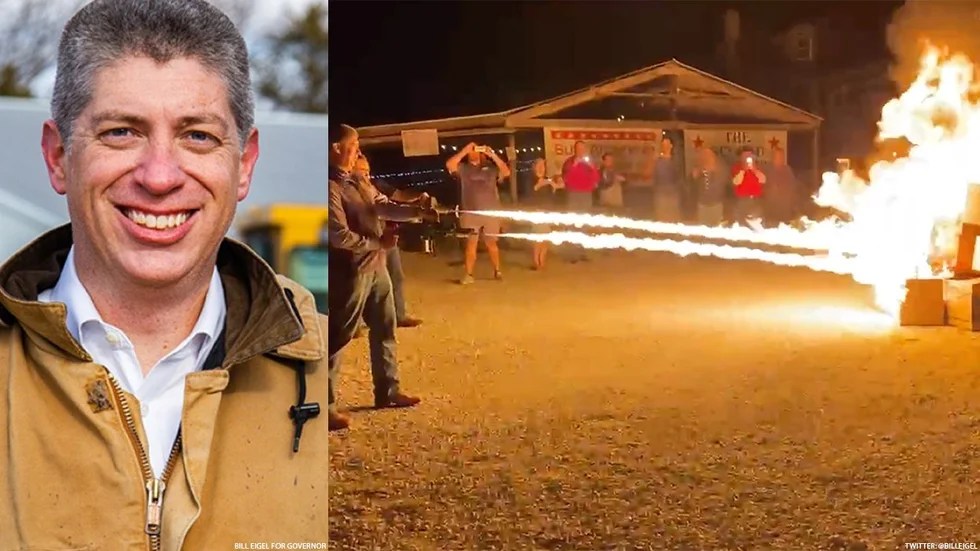
Missouri State Sen. Bill Eigel burning boxes of ‘Woke Pornographic Books’ at a Republican Rally in Charles County

The rise of book burning in Right-Wing Christian America and across the globe is something that should concern us all. Many things can be deemed ‘dangerous’, Explosives, Guns, Cars, Travel to Certain Countries, but, with the proper Education, Preperation and Moral Foundation an informed individual can then make a choice as to whether they wish to engage with these things in a way that is both productive and relatively safe. Personally I abhore the philosophy around the creation and continued development of guns and weapons but, as a gamer and as a younger person I can shoot and have shot (both target and clay pigeon). I take some pride in my marksmanship and am constantly fascinated by the science and innovation of ballistic technologies all the while disagreeing strenously with the philosophy, bigger weapons don’t make you safer.

Certain regimes have come to the conclusion that certain ideals are dangerous and constitute a threat to their way of life, Socialism, Activism, Different Religions and People who are LGBTQ+ are somehow a ‘threat to us’. Of course their definition of ‘us’ is a very narrow one indeed centred on race, class, income and religion. And so they attack these populations by ‘othering’ them, creating an ‘Us vs Them’ situation of scapegoating and fear but, that tactic cannot stand in the face of Knowledge. If the wider population get to learn more about these people, get to feel sympathy for them and their struggles either through fiction, biographical accounts or even coming to understand their culture by reading their own literature or scripture, then they might see all the similarities, rather than the spurious accusations of the State or Church. So comes the purge, you can’t learn about people if there is no material to learn from. Any TV shows or Movies with representation are picketed and protested, educational materials/literature in schools are met with calls to censor and books currently in circulation are burned. Ignorance is the weapon of Totalitarianism, you can’t feel for you ‘enemy’ if you don’t know them.

Historical Book-burnings from 600BC to Present

So what about titles like The Anarchist Cookbook, Mein Kampf, Harry Potter? What about titles that espouse hate, segregation and superiority? Well, much like a gun, they’re not dangerous until in the hands of a human being and, even then, if that person can see the danger and appretiates the harm they can do then these works can serve as a warning. Books aren’t dangerous, weaponised ignorance is. Fascism thrives in the dark. If we forget, the world grows darker. Shining a light, via education and understanding is our way forward, our opposition is understanding the circumstances that create the Fear that empowers Fascism, Inequality and Hatred and combatting that.

So, for continued Reading, here’s the link to the Banned Book Week Website, including the list of the most challenged books of 2022 (Spoiler: Most of them are LGBTQ+ Positive). The Honorary Chair this year is reading advocate and actor Levar Burton and good luck to everyone involved in raising the perception and understanding of this issue.

Been Away for a Bit, Back Now

Oof, it’s been a while since I blogged and I apologise profusely for that. I offer no excuses only assurances that I have been hard at work on the E-Rail Trilogy which is (finally!) in the hands of the Publisher.

So what *else* have I been up to this year? Events, mostly. Things are rolling steadily on, it gets tough, forging on without a regular release. I told myself at the beginning that I would have a book in hand and release a new title every year at least. However, like most plans, it did not survive contact. However, a trilogy offer is not a thing any writer wants to turn down and I’ll be building the hype-train with the help of Vulpine Press once we have an idea of release date.

These next two years are going to be an interesting time event wise. Circumstances around the Young Adult Literature Convention mean I will not be attending the event at LFCC Winter (I sure hope the works on the Olypia allow the event to return to LFCC Summer), also Eastercon 2024 is a no-go for me. In fact, once the Innsmouth Literary Festival, Wyntercon and Dragonmeet are done, I’ve got quite a long break between events. However, Worldcon Glasgow 2024 is going to be huge and, if my event calendar is to be so upset by an international Sci-fi and Fantast Literature Convention, then I welcome it whole-heartedly.

Again I am back in that position of ‘looking around’ to see what events are viable but, with new titles and some established fans/readers I don’t want to leave them behind as I go. I’ll never not support Portsmouth Comic Con as it is today. Any con where the biggest disappointment for vendors is having to sit on the waiting-list for a place is a con I’m happy to support. I’m looking into the MCM ‘Writers-Block’ but, again that’s going to have to wait until after Worldcon and, with the company recently having been bought, there’s not ‘preference given to existing traders’ anymore, it’s a free-for-all and if you get in, great, if you don’t, oh well, try again next year and don’t feel too bad about it. I certainly hope Wyntercon goes well, I’m very interested to pick a handful of the UKCGF events running up and down the country to pad out my trading events roster, Reading Comic Con is back with Creed events, plus a couple more I want to get to.

So, pure trade events aside, the industry conventions are still there and still an invaluable chance to meet up, be seen and get or share advice. I just returned from Fantastycon 2023, last years event was much reduced due to Covid but there where around seven-hundred attendee’s this weekend and, when you consider that a high proportion of those have some roll within the industry, attending is really a no-brainer. As I say, Eastertcon is being swapped out for Worldcon next year, the Satellite team are heavily involved in WC so we’ll be looking at 2025, maybe for Satellite 9? I think. Novacon is a small but worthwhile visit and then there are a couple of events in Ireland my friends across the water want me to attend which, since my publishers are based there, I really want to go and meet them.

So, aside from events. With the wider publishing industry still in something of a nose-dive and with no clear direction I’m absolutely sticking to my hybrid publishing model. I have an in with a recently established publisher, they’re hungry for titles and so I’m going to offer them all I can. I’ve recently gotten it into my head to go back to the world of Camelot 2050, I frequently get asked about ‘the next one’ but I’m not going to force it. For now I want to apply my more learned eye to the prose, give the series a re-edit, clean it up and do a new cover-arrangement to elevate the books before starting on new stories. I will also be writing shorts as they occur to me, building a collection for a small anthology, possibly to bridge the original trilogy into the new books. We’ll see. I have a couple of exciting projects on the go, a collaboration with S.G. Mulholland that I am very excited about, my long-talked-about urban fantasy series, and a selection of stand-alone projects. I’m looking forward to a busy time, editing, writing, promoting and just trying to raise my game. A self-pub author named Ryan Cahill has made quite a splash and basically shaken me into ‘trying to do better’, and it is with that in mind that I will be pushing forward over the next year.

Separating the Art…

CW: Discussion of Politics, Bigotry, Anti-LGBTQ+ sentiment, Racism, Anti-Semitism, Spoilers for Attack on Titan.

Disclaimer: This blog contains my own opinions and experiences, anything described as ‘Fact’ is so considered within the limitations of my own strenuous research.

In Addition: This post was published *before* allegations of sexual misconduct arose around Till Linderman of ‘Rammstein’.

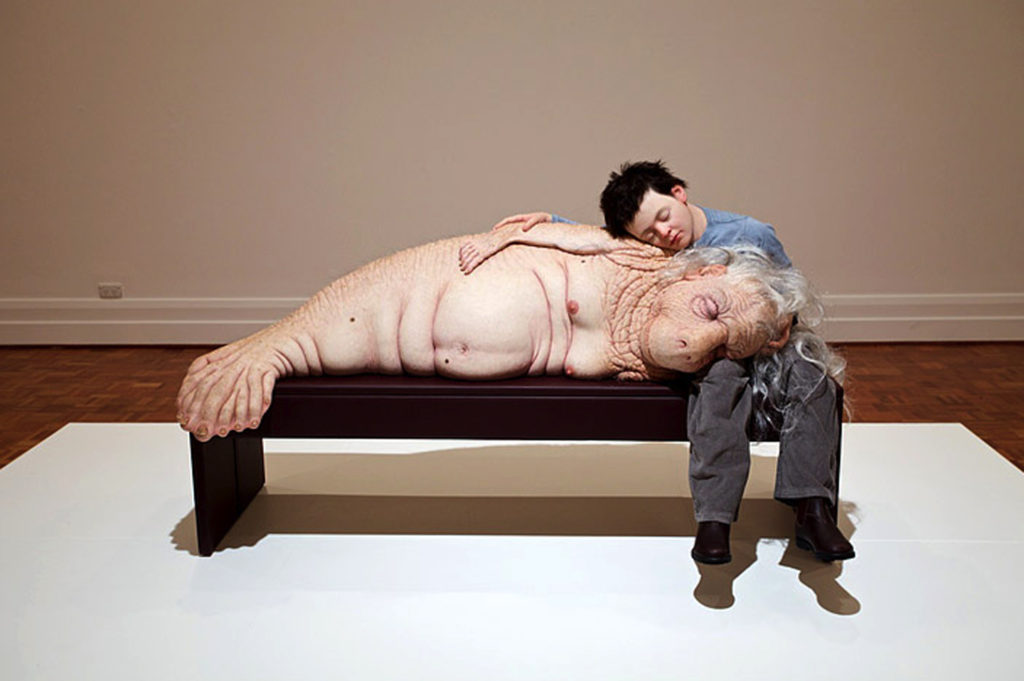
‘The Long Awaited’ – by Patricia Piccinini

Just of late I’ve been thinking about the ongoing argument of ‘Separating the Art from the Artist’ and the times and properties where that can and cannot be justified. A couple of things have prompted these thoughts: the Harry Potter property and its controversies, the ongoing popularity of Attack on Titan, among other things. There are questions around ‘What is art?’, ‘Why do we create art?’ and such that roll into the discussion so maybe start there.

What is Art/Why do we create Art?

Without diving into centuries of well established philosophical argument I think it can be widely accepted that art is an ‘Expression’. It’s an expression of something that has meaning to the artist, a place, a person, a feeling for example. ‘But What about Portraiture?’ you might ask, well. Perhaps painting images of people for money is an expression of the artist’s desire to eat, live in comfort and continue to create other forms of art? Art by it’s very nature is subjective, it defies regimented definition, this is why someone might offer thousands of pounds for a light switch in the Tate Modern or dispose of vintage paintings worth hundreds of thousands of dollars. One of my college Media lecturers said that, ‘Media is about provoking a response’ and art is much the same except it’s a response to something that has provoked the artist.

Given this very limited definition I would raise the argument that Propaganda, while it can be artistic, isn’t really art but Media no matter its form. As stated above, art is about the artist’s reaction; the painter, the author, the director has been moved by something to create a piece in response. Our society demands we earn and so art becomes a thing for public consumption, it is commissioned, it generates revenue but, if distilled down to its core, can art really be generated by someone who doesn’t believe in what they are doing or, more extreme, opposes it vehemently? Propaganda is about generating a response or, in fact, eliciting the same response in the audience, that the creator feels on a certain subject.

So, on separating the art, let’s open a grab-bag of creatives who have come into the orbit of my experience and maybe generated some controversy of their own.

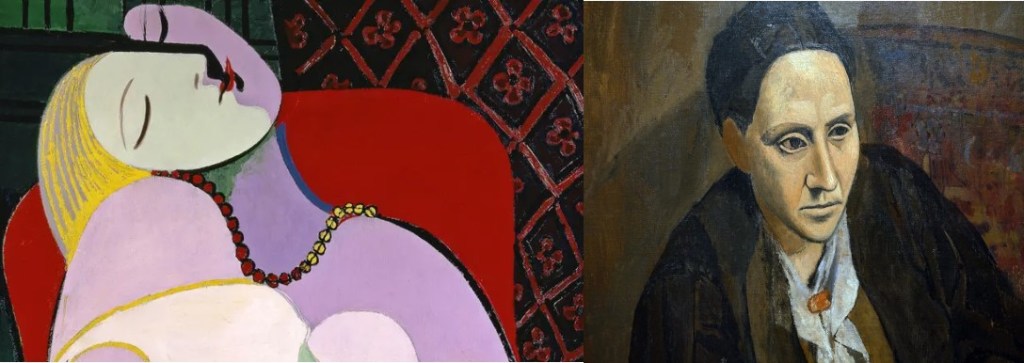
In 1977 at forty-five years of age, married and internationally renowned painter Pablo Picasso seduced 17 year old Marie-Thérèse Walter, drawing her into a long-term affair that, even at the time, was illegal and immoral. They were together from 1926 until 1940 and had a child. The affair was a long-held secret. Although Picasso was invested in divorcing his then wife (Olga Khokhlova – a Ukranian ballet-dancer) Khokhlova was opposed to the idea, holding Picasso’s works hostage until an agreement was made. The divorce was never actualised, but she and Picasso were estranged and, for all intents and purposes, separated. Picasso is a problematic figure. No doubt he tried to use his notoriety to impress Walter (although she didn’t know who he was, he had to take her to a bookshop to show her) and he is widely considered a misogynist and narcissist. Still, he had a long-term platonic relationship with Gertrude Stein, a pioneer of gay culture, and painted her portrait six times. Can we separate the art from the artist? No, the stories around the art inform them, Picasso’s paintings of Walter and Stein are informed by understanding the depth of feeling involved.

Sleep and Portrait of Gertrude Stein – Pablo Picasso

Feeling B was a punk-rock band formed on the Communist side of the Berlin Wall in 1983. After writing a song about the Rammstein air-show disaster (in which over 70 people were killed when an aircraft ploughed into the crowd) they became know as ‘that band with the Rammstein song’ and eventually industrial metal group Rammstein was born. Rammstein has often been associated with the Far-Right. Their shows have been described as reminiscent of the Nazi Nuremburg night rallies, their costume and styling and the pounding rhythms of their songs seen as militaristic alongside the fact that, contrary to wider industry marketing practices, they record and distribute their songs in their native german. Are Rammstein the darlings of the Alt-Right? Good heavens no! A punk rock band formed under the oppression of the communist regime was never going to go facist. Rammstein draw on German culture and history to inform their punk-styled anti-establishment material. In 2019 in Poland (as anti LGBT+ laws were on the rise) they flew Pride flags at their concert. The same year, two members of the band kissed onstage in Russia in protest to the anti-LGBT+ laws coming in there too.

Rammstein in the music video for Deutchland – Warner Music Group

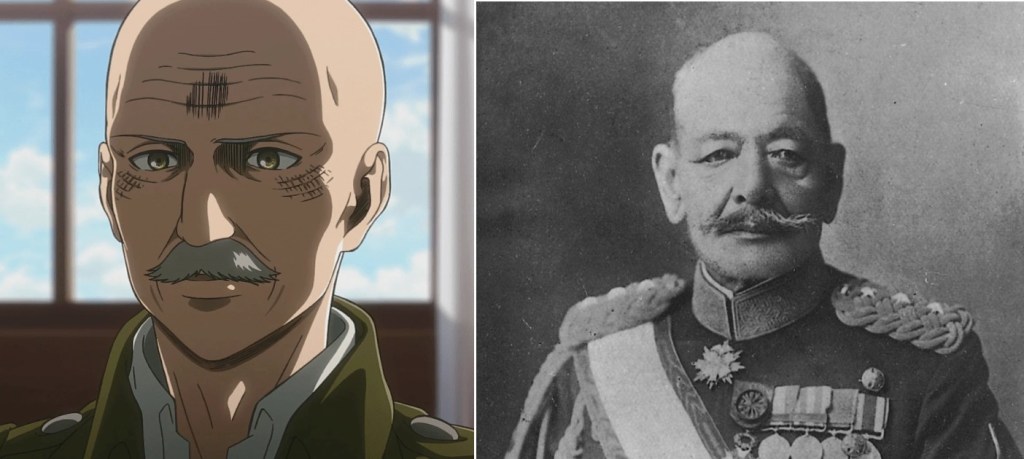
I watched the first season of Attack on Titan on Netflix and I loved it. I was coming back into Anime after a long hiatus and there was a lot of hype at the time. Stylistically AoT had a strong identity, a sort of Napoleonic war era feel but with the addition of ravenous man-eating giants of Titans. I also felt the story was well told with lots of opportunity for development both for the characters and the world. Then came the wait, when would season two be released? As I waited I searched and found one hell of a rabbit hole. You see, the light-novels the Netflix animation was based on were far progressed and boy-oh-boy was it problematic. Hajime Isayama’s work takes place in a world where a people knows as the Eldians had the power to transform into Titans. This ability was used to subjugate another race of people, the Marlyans. Eventually the Marlyans overcame the Eldyans, consigning them to an island where all knowledge of their past is suppressed. They believe themselves to be the only people on the planet and the titans to be monsters. Any Eldyan left on Marley is consigned to a ghetto and forced to wear a yellow armband embossed with a styalized star… yeah, let that sink in. The show’s protagonist, Erin Jaeger, goes on a journey from orphaned boy determined to wipe out the Titans, to secret weapon with the power to become a Titan, to military leader determined to re-establish the Eldyan empire… Of course, creator Hajime Isayama would never answer questions about the strong pro-military, fascist, anti-semitic elements of the piece, saying only that it was ‘not his place to influence the viewers’ perception of the piece’, (I paraphrase, but that’s the gist). One character, General Dot Pixis, is aknowledged to be based on real life Japanese General Akiyama Yoshifuru, who oversaw atrocities committed against Koreans and Chinese during Japanese occupations in World War 2.

Dot Pixis and General Akiyama Yoshifuru – Images courtesy of Netflix and Wikipedia

The first album I ever bought for myself was Back into Hell, one of a slew of Hell Bat themed albums produced by Arista Records after the overnight success of the Steinman/Meat Loaf collaboration ‘Bat Out of Hell’. I followed Meat Loaf for a long time, after he dissappeared from the scene until he reappeared after a long absence with ‘Welcome to the Neighborhood’ in 1995 with Geffen (after Sony spent a large portion of the 80’s/90’s suing Meat for all he had) and onward. I’ve seen ‘Bat Out of Hell the Musical’ twice. I regarded Steinman’s lyrics as something of an oft-light-hearted take on the American teen romance, interspersed with some truly moving works and real jump-up-and-dance numbers. I never really paid attention to either artists’ politics. They met in LA in the 70’s and nothing they performed together seemed too politically motivated, I just enjoyed the music. Imagine my disappointment when, during the Covid crisis I discovered that Meat was a fairly active voice for the anti-mask, antivaxx movement. Given that he collapsed on-stage in Pittsburg in 2022 from an asthma-attack I’d have hoped he wouldn’t have fallen to that side. I will admit I haven’t listened to any of the Jim/Meat collection since Meat passed, I can’t really distinguish between the grief and the dissappointment associated with his views on Covid vaccination. It’s a complicated issue with many personal facets.

Of course, the big one doing the rounds is J.K. Rowling and Harry Potter. I’ve often been advised to keep my council. I am, after all, only just starting out in an industry where once Rowling was queen, and her followers are still many, vocal and, at times, capable of hateful and hurtful things (but they are not in any way exclusive in that department). Still, I know many people who were, or are, invested in the Harry Potter intellectual property. For whatever reason they cannot bring themselves to be parted from it. For myself, I avoided the furour surrounding the Potterverse. I’d read ‘The Worst Witch’ by Jill Murphy and graduated onto the socio-politically savvy works of Terry Pratchett. To me Rowling’s works were a poor pretender, the accusations of rampant plagiarism steered me away. Eventually I watched the movies, with friends and family, but still didn’t really get the hype. What I saw was a Totalitarian State, hidden behind the curtain, who tarred the wider humanity and those of mixed-pareantage with racial slurs and hate-speech, a world populated with thinly veiled stereotypes where a creep and an abuser was hailed as a ‘tragic hero’. Then it started, retroactive claims of representation, a rise in transphobia, back and forth, the fan-base laying claim to the works, celebrities coming out for or against, ‘cancel culture!’ on the rise and decried at length, and on and on. Most recently ‘Hogwarts Legacy’, a game rife with anti-semitism, helmed by controversial figure Troy Leavitt (Controversial?! He spoke out against GamerGate and the #MeToo movement!) until his departure in March 2021. It seems from her most recent social media that Rowling refuses to allow herself to be separated from her art, stating that the continued consumption of HP merchandise shows public support for her anti-trans views (‘or, at least, isn’t a deal-breaker’ in her words). Rowling continues to espouse her rhetoric of hate to anyone who will listen and uses the continued success of the Potter-verse to justify herself and lend herself relevence.

So, when can we separate the artist from the art? As with many things, it just isn’t that simple. Is the artist using their art and platform as a means to harm others? Is it art or is it propaganda? I think I’d rather hang a Picasso in my living-room, than make room on my shelves for a brand new set of Harry Potter books, and I’d much rather listen to Meat Loaf or Rammstein, than watch Attack on Titan again. Like anything, Art itself isn’t inherently evil, neither is it inherently good, something made as propaganda for the purposes of hate can still have artistic merit, or be used for satire. Rammstein famously used sequences from Leni Riefenstahl’s 1936 film Olympia, a Nazi propaganda film promoting the Berlin Olympics of 1936, a film which is also number 37 on the BBC list ‘Top 100 Films Directed by Women’. But sadly, in the case of HP, the damage is ongoing, the hurt and the hate is real, and the artist will not step away from her platform.

Is it ‘Cancel Culture’? Or is it ‘Consequence Culture’?

Contractual Obligations

I know it’s been a while, I like to cover new ground in the blog and, lately, it’s all been a bit same old/same old. I could try and write a piece on overcoming a break in productivity but it’s old news really. Instead, and in light of recent events in the entertainment industry, I wanted to discuss what to expect and to look out for in a contract. The pitfalls, traps and opportunities that can be present in among all the legalese.

So, I’ve been watching the blowup of WotC over their open license revision and it occured to me that, in the discussion of writing and publishing, contracts have only recently become an open topic. Hollywood has had to go through a righteous shift as actors have started openly discussing the rates studios have offered them and the clear disparity between the payouts offered to male/female artists and, while I’m not saying the same is true of authors and publishers (but I’m not saying it isn’t) it benefits a new author to be aware of what to expect.

For many of us this is the goal, the contract, getting someone else to take on the bulk of the work from typesetting, printing and layout to promotion and publicity etcetera (doesn’t always work out like that but, hey). In every case my first word of advice would be, ‘Read your contract.’ I’ve mentioned my particular aversion to official forms of all kinds, and it does extend to contracts (it’s something around all the official, formalised language, I think) but in this instance, reading and understanding your rights and obligations is a must.

The Advance – Let’s get past this already, getting a lump sum handout of $10k to $20k is not something many of us will experience. And let’s be clear, a publisher doesn’t pay royalties until after the advance has been recouped in sales. If you take into account that a reasonable contract with the big publishers will net you less than fifty cents per unit (each book sold) that means sales of more than twenty-thousand books. Douglas Adams Hitchhiker’s Guide might have moved 250k in the first three months back in 1979 but that’s not to say you or I will. It’s not easy to source sales figure of recent titles for comparisson, I tried looking up 2019 Hugo and Nova award winner The Calculating Stars by Mary Robinette Kowal, but alas, sales figures have become a marketable resource, ergo you have to subscribe through a service for access. A large publisher’s title might average ten-thousand sales, but that’s half what’s required to sell through the advance.

Still, most small or independent houses don’t actually offer an advance, but they do offer a better rate on Net sale royalties and, noteably, they should also allow the author to retain the rights to other formats. If you see the word ‘exclusive’ in the contract, don’t panic, read on, you ought to find that this only applies to print and audio. You should retain rights to stage, screen, even graphic representations and radio. Heck, even merchandise for those of us keen enough to persue it.

Contracts where authors can run afoul of ‘Exclusivity’ might present themselves via companies who run ongoing but ‘open’ intellectual properties. Many comic book printers also print books and produce audio-books. Rebellion (who own 2000AD) and have long printed text based stories within and without the pages of their graphics. E and Audio books are now available set within the world of Judge Dredd and their other titles. Any author intent on writing within those worlds has a chance but must be aware that Rebellion owns those properties and retains the rights to any story set within those settings. All well and good. However, if you were to submit an original piece to publishers like this, don’t then be surprised if the resulting contract hosts and iron-clad exclusivity clause upon the work, any subsequent works in the setting and permision to allow other authors to create works on the publishers behalf. In fact you don’t even have to wait for the contract, the information is freely available in their submisions guidelines. The fact is, Marvel, DC and Rebellion, all need writers to keep working within their established properties, but that doesn’t stop them looking around for new IP’s to incorporate into their brand.

The balance to this in the world of small-press is that you might find a clause requiring you to submit future works to a publisher who has accepted your submission. That’s not a ‘guarantee to print’ but it is a legal obligation for the period of the contract.

Reversion/Revision of Rights – the term of a contract and the term of copyright are not the same thing. A contract to publish before sole rights revert to the author is a negotiable term, perhaps fifteen years, maybe more. Copyright protection in the UK of literary works currently runs to 70 Years following the death of the author (you might want to consider who you’ll be bequeathing the rights for your works to). You should also have a section covering what to do if you decide you want to take the work back from the publisher and dissolve the agreement.

It’s worth remembering that contracts aren’t supposed to be vindictive, but that they have to present a clear course of action should there be a falling-out or disagreement between parties. The idea is to be fair but, in that case, some prior knowledge of how others are treated is needed. We’re not all expecting George Martin-esque figures and payouts but, being rewarded in line with out contemporaries shouldn’t be too much to ask.

When I worked a dayjob, discussion of wage rates was a discouraged, nay an actionable offence (at least, some agents of the business would have you believe it) but business feeds off that very kind of ignorance. If you don’t know what the person next to you is pulling down each month, how can you argue for fair terms? The same extends to creative industries, companies making profit from a product, it’s not that different. However, smaller firms (hopefully) will try to treat their contributors more fairly but this can only be assured if there is a discourse. Openess encouraging Fairness.

So, read your contract, do some research into your rights and maybe ask around about the terms offered to others in the field. Don’t be afraid to discuss the terms.

NaNoWriM-Oh My God!

I think my regular visitors might have an idea of my thoughts on Nano, for the newcomers among you, I am not a fan. Though I laud the idea to encourage creativity and structure in new writers I cannot, cannot, cannot overcome what I see as the risks involved to budding writers confidence, and the knock-on effect on the publishing industry as a whole.

You *might* not have heard of NaNo, an American nonprofit organization whose goal is to provide support for struggling writers and their event NaNoWriMo (National Novel Writing Month) and it’s challenge to write fifty-thousand words within the month of November without stopping, reviewing or editing. But now you have, it’s a splurge challenge, Quantity over Quality.

I don’t have a problem with encouraging creativity, I *do* have an issue with forcing it. Many of us struggle, I struggled and yes, a structured approach to writing is a real help. Whether you schedule your time day-to-day or keep an accountability diary where you note down if you did any writing, whatever works, right? Well, no. Trying to force creativity can be damaging to your process, your confidence and your self-esteem. My continuing message to those who would be writers is ‘Be Kind to Yourself’, forcing One-Thousand Six-Hundred and Sixty-Seven words out of your brain each and every day of November is not kind. My best days to date I have written in the region of three-thousand words, but it is not a sustainable rate, at least not for me. For every day of pure flow there are days, if not weeks of zero-to-two-hundred and fifty words.

Beyond the harm you can do to your creative self if you get caught up in the challenge and take it too seriously (trust me, tapping my Duolingo ranking experience here) there is the further impact on the industry. Publishers effectively shut-down for four-months post November. Why? Because of the torrent of unsolicited, unedited NaNo submissions that probably don’t even follow their Submission Guidelines. If you saw NaNo on this article and clicked in for tips, Yes, publishers have guidelines for submissions. It’s a major part of getting your manuscript considered for publication.

Still, if you are taking part, remember. It’s a guideline. The 50k is a goal but you don’t have to hit it, any progress made is admirable. If you find yourself stuck, walk away and do something to renew yourself before you go on. Writing doesn’t all take place at the keyboard. Any and all experience is part of the process. Instead of locking yourself away for the month of November take some time to read, watch, listen to, speak to, or do the things that create the experiences that will fuel the writing.

So, maybe you can write a Novella in a month, maybe you get through it without quitting, tossing it aside as pure trash and vowing never to attempt writing a story again. Good for you. Don’t submit it to a publisher. Not yet. First, edit it, re-read it, spell-check it, check the continuity of events, names and such. You’ve just thrown it at the page, take the time to polish it. Then look for an appropriate publisher, make sure they are accepting submissions (you’ll have until March according to several publishers I’ve spoken to) and construct your submission package. Whatever you do don’t tell them it was your NaNo project.

I know that there are people out there, far more talented than I am, who can probably write true genius over the course of NaNo. Of course I hate them, and I don’t even know them, envious creature that I am. But, in the slew of submissions by others who, in a sheer fit of enthusiasm, contribute to the overloading of publishers post-NaNo, those works go unconsidered, unregarded and unread, and those writers might not venture to try again and that is a loss to the reading community.

Do I hate NaNo? Not really, its a grand idea, but it’s a victim of human impatience. The ‘Yay, I did the thing, now what do I get?‘ mentality. Making a career as a writer, or even getting your first book to print, is a marathon, not a sprint. So, as ever, Be Kind To Yourself this NaNoWriMo. It’s a challenge, not a task and no-one is cracking the whip over you but you.

Pro-nouns and Pro-gress

A while back I was part of a virtual panel for Chicago Worldcon 2022. The panel was called ‘More than Sex-bots and Slaves’ and focussed on the treatment of synthetic organisms in popular media. As we were talking I brought up the idea of using android and alien characters as a stepping-stone for the introduction of neo-pronouns into the public consciousness, to which the moderator immediately clarified ‘but that’s not how we see you.’ I understand that clarification, and there wasn’t time on the panel to expand on a point which might easily be misinterpreted in its intent, but it does make good grounds for a blog article, so, here goes.

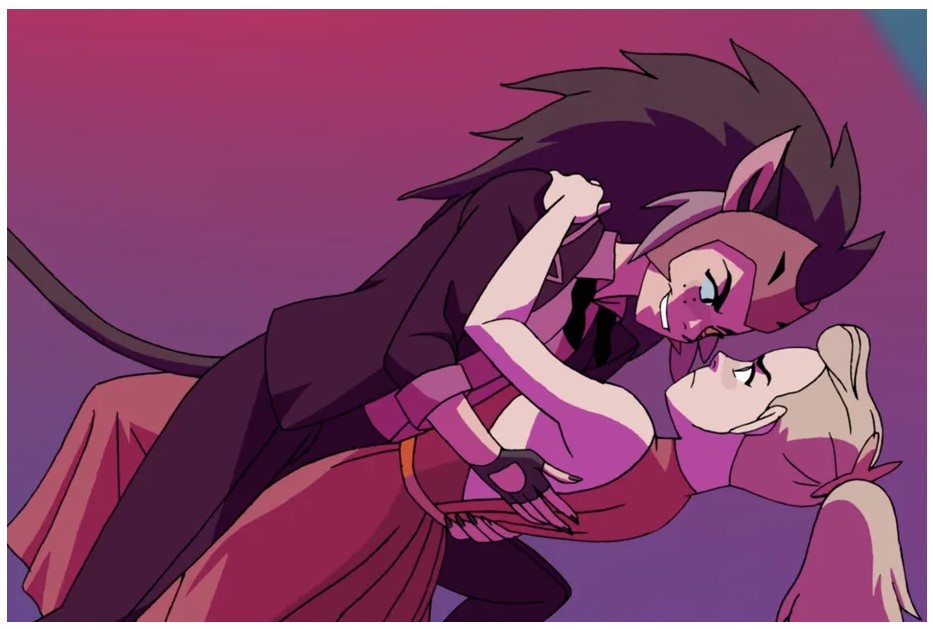
Image Courtesy of She-Ra and the Princesses of Power – DreamWorks/Mattel

Firstly, it’s my belief that theScience-Fiction Community is one of the most forward-thinking and inclusive groups of fandoms there is. But even here, we see toxicity, we see bigotry and push-back against inclusivity, especially when people perceive inclusion as a threat to ‘their’ canon. Take the recent negativity around She-Hulk or The Rings of Power or the live-action The Little Mermaid. Bottom-of-the-barrel sexism and racism, and we haven’t even gotten into LGBTQ+rep territory. So, it seems that there is a ‘need’ and science fiction and fantasy are, very simply, the best place to ‘plant the seed’ (I’m a cis man, and even I’m staggered that I still have to use that kind of grass roots terminology and approach).

So what is ‘Normalising?’

Simply put, it’s exposing someone to a subject until it’s common enough that it becomes familiar or normal. When faced with profound change, it’s unfortunate, but the impulse among the majority is not to embrace it. A change to the status quo is something to resist, especially if it effects our day-to-day lives. It’s pretty complicated, many people who recoil at the use of non-binary pronouns didn’t bat an eyelid over the withdrawal of the right to peaceful protest. It’s nonsensical, but I guess that they feel the chances of having something to protest about is much less than the chances of them running into someone who prefers to be addressed ‘they/them’, and I can’t tell you why it angers or scares them, but it does. Still, by introducing characters in fiction who use ‘They/Them’, ‘Zhee/Zher’, ‘Xe/Xim’ or any of the neo-pronouns, we’re softening the impact.

But why do these characters have to be aliens/robots? What does that say about your opinion of non-binary people? Does it mean that we see all non-binary people as aliens or robots? Of course not. It says a whole lot more about my opinion of the people who are resistant to treating other human beings with care and compassion. If a person is going to rage-quit because they don’t agree with a character in Doctor Who being a woman, or being queer, then they won’t finish a book where a human character is non-binary… but they *might* if that character isn’t human. That’s the point where it becomes non-threatening to their worldview and (much as I hate tip-toeing around bigotry) that’s the point where education starts. Confronting bigotry directly can just be pouring petrol on the flames, but slow and steady exposure might erode it’s
foundations. One of my major influences in my writing is Sir Terry Pratchett, who beautifully introduced the idea of a change in pronouns through the lense of fantasy species – namely the Dwarf character of Cherry/Cheri Littlebottom.

It is the place of speculative fiction to go there and ask ‘What if?’ and, by asking that question, challenge the world we know. Apparently ‘we’ know that ‘they’ and ‘them’ are plural terms, but they’re not. They’ve been used as singular since the 14th century. And language isn’t a fixed, static thing either. It changes and evolves, The Darling Buds of May (1991/1993), David Jason as Pa Larkin, was responsible for the addition of the word ‘perfick’ to the Oxford dictionary. The September 2022 update of the Oxford English Dictionary reported the addition of 650 new words, senses and sub-entries (since the June update).

Another push-back against representation of neo-pronouns in literature is the idea that using ‘They/Them’ as pronouns ‘confuses the reader’, as it becomes unclear who is speaking. I’m not going to pass judgment on the wider industry view but, in my opinion, it’s not elementary level language that makes a book ‘easy to read’. It’s a combination of language, context, sentence structure, rhythm and pacing. A badly constructed sentence will be hard to read no matter the level of language used, it’s more a matter of putting the work in to get the flow than just dumbing down the words.

Suffice to say that, we have enough cis, het, white fiction, and the rise of LGBTQ+ stories and stories by authors from diverse ethnic backgrounds is something to be celebrated, something to immerse yourself in and something to be supported whole-heartedly and there are clear signs of progress. Thor: Ragnarok grossed $112 million in China, Thor: Love and Thunder didn’t make it past the countries censors because Disney wouldn’t pull the LGBTQ+ content. If Disney can choose rep over profit, surely something’s going right. We had to have Korra and Asami to prove to the money-men that there was demand for Catradora.

Where Am I?

Alright, so, I haven’t been around for a while and that’s not so good for retaining a blog following. Also we’re headed into the darker months so things *are* likely to tail off until next year when I promise to try to do better (and, hopefully, I’ll be more active and have more to report upon anyway). I’ve also let the ‘Year in Review’ posts slide, maybe I should sort them into a seperate section of the index in order to remind me, that’s food for thought. However, the last two years have been kinda suppressed by Covid in anycase so lets do a look back at where I wanted to be and then look at how things have changed.

Gif Courtesy of ‘Phineas and Ferb’ Copywrite Disney Pictures

I had a four-year plan back in 2017 (the year I quit ‘regular’ work and focussed all my attention on writing). THe goal was to have a trad-pub title at the end of it. Four years, get traditionally published. Well, I’m happy to report that I smashed that. Renderred Flesh hit shelves in April 2021… mid Covid.

I wouldn’t say I ‘lost’ two years of progress to Covid, my plan to establish a list of trade and literature conventions to regularly attend certainly took a step back but, writing-wise it hasn’t slowed me down (I can do that quite effectively myself). So, what is going on, and where am I going next?

Projects in Process:- As you might have seen, I am currently under contract for a Science-Fiction Trilogy with Vulpine Press. Two installments of the tentatively titled ‘Riding the E-Rail’ series are first-draft complete and I’m hoping to steam through part three asap.

I am working on a very exciting collaberation alongside S.G. Mulholland, of the Puck and Stargazer series. This one might take some time, there are parts of the story centring around the fluidity of identity which are above and beyond anything I’ve ever attempted before.

Bentley. Some of my followers might have heard me wax lyrical about my ‘Lock-Stock meets Lord of the Rings’, Guy Richie infuenced urban fantasy series. Well, work has begun, words are being lain down. Eventually I hope this project will be a run of seven books (one for each of the ‘original’ stories).

Rendered Flesh, is it dead? Nope, noppity, nope nope. I have had an idea for another installement to Flesh-out the story as it where. I’m making notes and plans but stick close, I should soon have news to report about Rendered Flesh: Alpha Access.

Other projects:- Aside from these twelve, count-em, twelve books there are a couple of other projects that I’m casually considering, apocalypses seem to be something of a theme but there’s certainly a slow-burn sci-fi thriller in there, something I’ve been considering for a long time. Titles are flying around me brain like A Mind of My Own, Superior, The Vapors certainly horror, suspense and such figure quite prominently too.

I’m hoping to get involved in more TTROG projects, I thoroughly enjoy working with others and I’m very much looking forward to seeing the release of Solemn Vale.

Camelot 2050, is still a title I’m pushing. I’m going to start submitting it again, this time to agents. If anything the responce of the readers I’ve met at conventions has increased my conviction that camelot could be a pretty big deal. There might be more material down the line, I’m still trying to come up wirth shorts to eventually combine into an anthology.

Conventions. Coming back to con’s has been a blast. I say that my Con schedule took a hit over Covid but, in the year we’ve been back I’ve made some good progress. Portsmouth Comic Con, YALC, Fantasycon, ShowMasters and UKCGF and Creed Conventions, I’ve come back pretty hard and mostly hit target. Although I didn’t get to go to Chicago Worldcon I will be at Glasgow in 2024 come hell or highwater and Dublin looks like a good bid for 2029.

The panel circuit continues to be kind, Dragonmeet last November, Eastercon, the Chicon virtual programme and, noteably, my first workshop at Fantadsycon was both well-attended and well-recieved.

So, there we are. Projects, plans, events. Everything to play for in the upcoming year and beyond. The thing to remember going ahead is this. It’s a marathon, not a sprint. Getting a deal and becoming famous is the Extra-ordinary, not the ordinary. As Jasper Fforde once said to a workshop, “The thing about being a New York Times best-seller, is once you get there you have to go out there and do it again.” and I’m not a NYT best-seller… yet.

A Poli-ticking Timebomb!

When ‘Rendered Flesh’ released, I knew it was going to be divisive. It’s a book driven by the main character’s politics and their identity, a leftist, socially progressive, non-binary activist, of course it was going to draw criticisms. Luckily, to date, the most scathing response is still an Amazon review (no death-threats from Right-Wing Proud Boys yet), accusing the book of being a ‘vehicle for the author’s politics’. I don’t clap-back at bad reviews, not directly anyway, and I don’t advise you to either but…

We live in a time of weaponized ignorance so, for the record. Yeah, ‘Rendered Flesh’ is a political commentary piece, it is. Me and George Romero, father of the zombie genre we know today (in fact he wanted them to be known as ‘ghouls’ to tie in with Western folklore, not the Haitian tradition). In fact, I’d go so far as to say that, if you’re actively avoiding zombie horror with a sociopolitical commentary? You’re missing out on the best of the genre there, bud.

But it’s not just me, is it? And it’s not just zombies coming under fire, Star Trek: Strange New Worlds recently drew (much mocked) criticism for being ‘too woke’. On the 14th of May 2022, Fox News tweeted the headline;

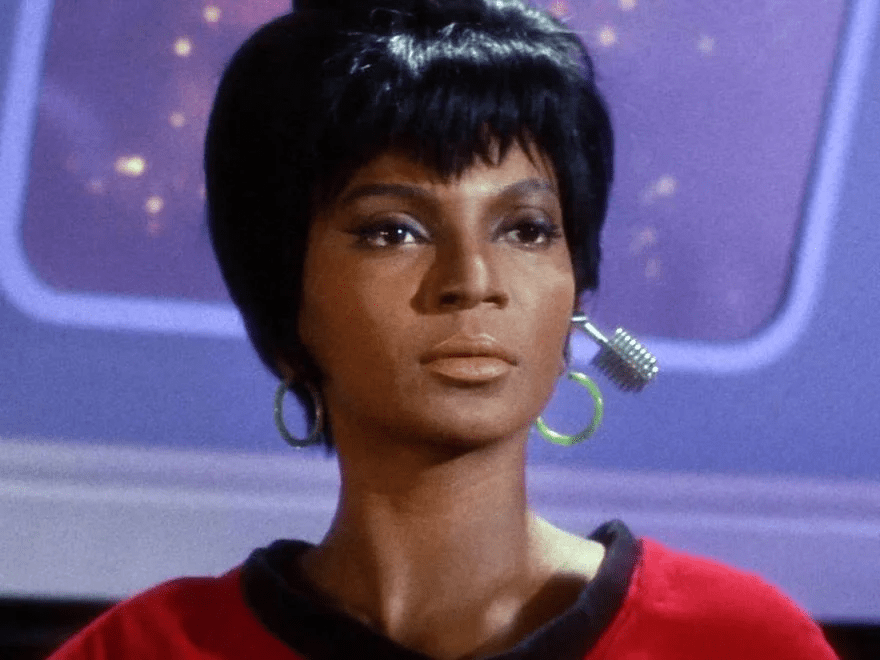
Nichelle Nichols as Nyota Uhura, Star Trek, Paramount Pictures

‘OPINION: Star Trek writers take Starship Enterprise where it’s never gone before – woke politics’

I’m certainly not the first to say it but, it has been “woke” ever since they included a Japanese-born actor, held in an internment camp during WW2, an actor depicting a Russian national at the height of the Cold War, and a black actress depicting the senior comm’s officer all as bridge crew of a space exploration vessel named for a Yorktown class Aircraft carrier that served in the U.S. Navy from 1936 to 1960, 7th of that name and the most decorated U.S. naval vessel to serve in WW2. Perhaps when they portrayed the first on-screen, interracial kiss between Kirk (William Shatner) and Uhura (Nichelle Nichols) in the episode ‘Plato’s Children’ in 1968, the same year (and months after) Martin Luther King was assassinated.

You cannot have a deep, detailed, engaging story without politics. The way people read and interpret your work is going to be influenced with how their politics interacts with the politics within your setting. I keep going back to it (because I love it) but Heinlein’s ‘Starship Troopers’, Orwell’s ‘1984’, Attwood’s ‘The Handmaid’s Tale’, these books are held up, not because they are political, but because they are overtly political. Here is a great blog entry by Ann Leckie that covers this point excellently (with some extended reading by R.B. Lemberg).

Pretty much any element of setting or story can be picked at as motivated by the writer’s politics, you can’t write an apolitical novel. The simplest examples (and these are sweeping statements, not remotely the whole picture);

  • Female Protagonist – Feminist
  • Male Protagonist – Supports the Patriarchy
  • Multi-Ethnic Cast – Liberal
  • Single Ethnicity – Conservative/Racist
  • Socialist setting – Communist
  • Militaristic setting – Fascist

These examples are extreme and over-simplified but, more and more, the world we live in is become divisive and extremist in it’s perceptions. The division that Edgar Allen Poe’s ‘Orangutan’ (The Murders in the Rue Morgue – 1841) causes between academics and the subsequent Reddit memes are illustrative of the trend. More recently the Manga and Anime ‘Attack on Titan’ (Hajime Isayama) has drawn criticism for it’s emergent Fascist undertones and messages and, despite looking long and hard for a final answer among the articles online, I couldn’t tell you if the show is an allegory for fascism or propaganda, is it so ‘overt’ as to be truly ‘covert’ just like Paul Verhoeven’s movie adaptation of ‘Starship Troopers’ (1997). This article in Collider gives the ‘cleverly subversive’ angle with supporting frames from the original text and is a direct response to a Polygon article (linked) by Tom Speelman that frames the opposite argument.

So, can you avoid politics in your work? No, not at all, it’s always going to be there somewhere. The only way to avoid getting called-out for being too political is to keep the focus away (if you can) and avoid commenting on hot-topic issues, or you could revel in it, be critical, be scathing, call-out the injustices and wrongs of the system, but do it though a lens of the fantastical, in the same way Sir Terry Pratchett did so well in the Guards books. The political content of any given piece makes people uncomfortable when it contradicts or opposes their own internal position. Although, I’m pretty sure we all know someone whom we feel would benefit from having their position challenged, don’t we?

Un-Convention-al.

The two-year gap on public events was a big hurdle for me to get over. Much as I proudly announce my status as a ‘Hermit Author’ I take a lot more away from events than just sales. The convention scene helps me recharge my enthusiasm, it’s great to talk about my books and talk to other people about theirs. Before the break I was diligently trying to build a calendar of reliable events to attend through the year, partly in the respects of Profit/Loss, partly in respect of good exposure/networking and partly just seeing which events where good for creativity and meeting people, which ones encouraged me to write.

The break for Covid, and the rising costs of living that we’re currently experiencing, have essentially rendered me back to square one. So, here I am, trying to build a new list of Literary and Trade conventions to attend over this and the coming year and it’s that experience that I’m going to share with you today.

Trade Cons

One of the first events I attended as lockdown was easing up was Reading Comic Con by Creed Conventions (they also run events in St Albans and previously Bath). Reading is a good location and the venue was just outside the city centre, accessible by road and public transport. 2021 suffered a little from the general uncertainty and the weather. I’ll certainly be giving it another run but the venue’s being renovated for 2022 so 2023 it is!

Portsmouth Comic Con, run by the ever-fabulous team at GoGeek Events. This was the event this year that fully restored my confidence in the UK convention scene. GoGeek are an anti-bullying and inclusion group who run Portsmouth CC, the Retro, Modern and Board Guildhall Games Fest and Portsmouth Pride. It’s fair to say that, with an ethos like that? I’ll never *not* support their events.

Showmasters Events are possibly the only events team in the UK that rival MCM for size and draw. I’ve been attending Showmaster events since Sheffield Film and Comic Con back in 2018 if I remember rightly. Since then I’ve been a regular at London FCC (Spring) and, this year, I have a table across the hall in the Young Adult Literature Convention or YALC. Now, the outlay (especially for YALC) was significant but, having turned over healthy sales at Worldcon Dublin, I’m assured the YALC is bigger, the footfall is greater and it is primarily a sales event so, fingers crossed, I’ll have something good to report after the event.

Now, I mentioned Bath above and, this year I’ll be there at an event run by the UK Comic Con and Gaming Festivals or UKCGF. This group run events from Bath, to Brighton, to Truro, I won’t speculate on what other locations they might be adding to their roster but they seem to be ‘on the up’ to me. Bath in August will be my first event with UKCGF and I’ve got my fingers crossed for it.

Dragonmeet is an event I’ve attended consistently the last four trading years. I’ve had to postpone booking for 2022 so I’ll see if there’s space left when I have a little money spare. I know the con organiser is pushing for more literature rep (being primarily a board game convention) and now is a good time to hop onboard.

I’ve certainly dipped my toes in other smaller events, Norfolk’s Comic Con (Norcon), Sci-Fi Weekender and Worthing Wormhole (now Wyntercon under Worthing Events CIC) and had mixed experiences. Far be it from me to shoot down people’s events but, as someone paying for a sales pitch, none of these small events paid for themselves (even before Covid). But you take a chance sometimes. Worthing teaming up with Wyntercon certainly makes it worth reconsidering.

Going ahead I’ll be looking at whether YALC outperforms LFCC Spring, though I’m not ruling out doing both. I’m already penciled in for Portsmouth 2023, but in the meantime, we’ll see how Bath goes.

Litcons

In all, brutal, honesty, litcons are going to be subject to quite close scrutiny over the coming year. High prices and bad venues have hit the circuit recently, claims that there are only a select few places to host conventions ring quite hollow in many ears and events have suffered proportionally. While previously the costs of litcons have been moderated by sales, several events have suffered, I’m sad to say, by the traders being given a lower consideration than other aspects of the con.

Eastercon (2023 billed as Conversation) is an event I’ve attended since I released Black Knight back in 2018, however it is one that has suffered from rising costs, bad location and a distinct lack of consideration for the traders attending. While it is one of the larger events for the UK Sci-fi and Fantasy literature community, the costs of attending in the near future, at this point, certainly outweigh the benefits for a small hybrid concern like me.

Fantasycon is another markedly prestigious event on the UK Sci-Fi and Fantasy lit scene. While I have always had a table for Eastercon and attended annually for some years, I’m new to Fantasycon, only having attended/traded there once in 2021. I’ll admit I had a really good time and met some great people. While I was signed up for 2022, alas the membership hasn’t been there and the con has announced it won’t be running as expected. I’ll keep an eye on what form it does take, but it was booked in the same Heathrow Radisson that Eastercon has been suffering at, so we’ll have to see.

It’s not all bad news though, Bristolcon continues to be a wonderful opportunity to meet fellow authors from all tiers of success (I met Jasper Ffjorde at the last one). Regrettably I have an unrelated event conflict for 2022 so, I’ll see you there 2023.

Likewise Satellite in Glasgow (soon to be Satellite 8) introduced me to faces old and new and showed me a different way to approach the same old programme items and panels.

And that’s not all. In the pipe we have Novacon running in Buxton. Again, much as I *want* to attend it comes down to how well things go at YALC, but I hope to be booking that soon. I’ll be getting onboard for Glasgow Worldcon 2024 in the next few weeks regardless and crossing my fingers for the Dublin’s Worldcon 2029 bid. Missing Chicon is going to be a big regret for a while but hey, I’m sure the chance to get there will come again. Maybe by then I’ll be Special Guest material.