Blog

Tastefully Written (Or – Food and its Place in Literature)

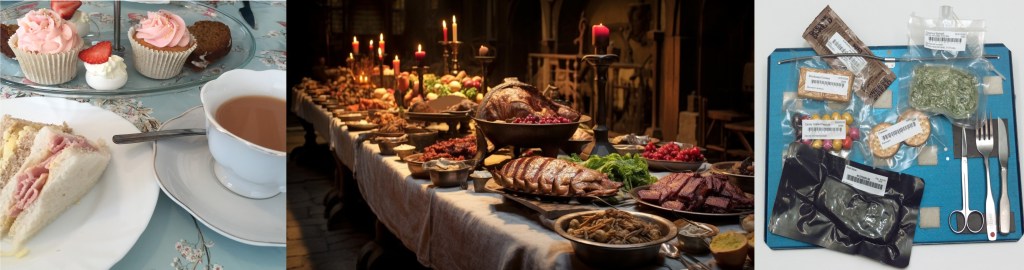
Bourbon and coffee on the mean streets, rehydrated rations on a starship, afternoon tea with the pastor, or a medieval style banquet in a castle in the sky. At some point, somewhere in our stories, someone sits down to eat, drink and (probably not) be merry, but why? A character on a page doesn’t need to eat, but by settling them into these particular scenes we can feed the audience insights as fulfilling as the food on the main’s plate and, through a smorgasbord of language, offer teasing bites into the world around them.

So, what’s the purpose of a meal scene? Firstly, it’s a recognisable social setting and whether your character is eating breakfast cereal while she mulls over events, or is tied to a chair watching some horrendous act of cannibalism. Within any meal sequence there are commonalities that can root the scene down in a kind of ritual of the mundane; even while the strange, magical or horrifying takes place around the characters, a starting point for the audience to identify with. Secondly it allows for something else to be happening to the character while acts of exposition or character/relationship development take place, for example;

The detective and assistant are discussing the particulars of the case, they do it over breakfast at a waffle house. The author flavours the thought processes taking place with such  phrases as  ‘I stared at the syrup left on my plate, gold and lustrous as the victim’s hair’, or; ‘Whoever was behind this had a heart as black as my coffee, and twice as bitter’. The scents, flavours and sensations of the food can also colour the scene, adding occasional breaks to the heavier prose.
Using food in a scene also opens up an entire larder of language to use for metaphor and simile. It’s almost a license to indulge in more florid, poetic language, if only for a scene. The language used to describe food, especially if it can be tied into the atmosphere of the setting or situation, can make the scene all the more flavourful, a touch of umami, if you will. It also allows you to illustrate certain characters’ traits, provide insights or foreshadowing.  The uncouth manner when we observed Denethor eating (dear god, those poor tomatoes) cemented or enhanced the idea that he is an awful character. On the opposite end, Hannibal Lector sets a scene of impeccable refinement, just moments before delicately feeding Krendler a flambéed slice of his own brain.

Food in literature also speaks to the genre. You don’t often find deeper descriptions of cuisine in science fiction. Freeze-dried or dehydrated foods tend to appeal to the technology levels or settings for space-travel especially, where weight is a major concern for everything. If a luxurious meal is represented it is usually a means to illustrate the difference between situations (starship vs planetary), species and their physiology (think Gagh), or levels of technology, civilization or culture.

Food in post apocalypse settings spins between rediscovering how to make/grow your own, and scavenged tins or rediscovered delights. The food of the aftermath of whatever is either a tribute to the courage and endurance of the survivors enjoyed as a community, an illustration of scarcity, or a guilty throwback to the times before, like a chocolate bar enjoyed in secret but bittersweet at the same time.

Fantasy tends to lean into western medieval traditions, bread, cheese and roasted meats and vegetables, stews, wines and beer. You’d be lucky to find a plate of linguini in the whole of Westeros. A recent challenger to this particular trope is the Manga (and Netflix Anime) Delicious in Dungeon which has raised the bar for fantasy food and introduced a definite eastern appeal, but it’s the show’s focus on food that leads to an interesting recent arrival on the scene, Cosy.

Cosy Fantasies (and the growing trend of Cosy Sci-Fi) take a departure from the more visceral aspects of their industry counterparts. In cosy, food takes a rather more prevalent role, and it’s most closely aligned to cottage-core. The bread and cakes are hand-baked, teas and wines are many and varied, the dishes served are levels of complexity removed from the usual fantasy fare, and so are the descriptions. The setting uses food to enhance a sense of loyalty, friendship and camaraderie, and meal scenes have long been a focus for just that, with the effort and care of preparing these fine victuals adding to the sense of homeliness and comfort.

So, food is an important part of our everyday lives, and it deserves to be represented in literature. From fast-food grabbed on the way to a big heist, to a gourmet meal shared between uneasy allies. When vampires grab a quick-bite, or the aliens share a banquet that brings worlds together, food and the setting, situation, and language used around it can add that last spice to your work. When the recipe calls for it, that is.
New Years Poetry

The last two years I’ve written a poem looking back and ahead. Here I record them for posterity.

___________________________________________

2025

We’ve just shown the door, to 2024
I’m done, that’s enough, but no wait! Here comes more!
Out with the Tories, now Labours in power,
What is it they say? Come the man, come the hour?

No wait, that’s all wrong, and it doesn’t stop there,
As a slimy cross-section parts Keir Starmer’s hair.
What is that scrambling out of his head?
Oh my word, he’s a Conservative Xenomorph egg!

The face-hugger chases the winter fuel allowance,
Corners the elderly, waits, prepares, pounces!
It takes but a moment, and out of its body,
Out bursts Liz Kendall and the ‘Back to Work’ lobby.

The DWP and the NHS,
Soon dragged to the basement and hung up in the nest,
Their coming out of the walls, game over man!
Smirks Kemi Badenoch, siding with Trumps right-hand-man.

Forget OCP or Weyland Yutani,
Now we’re up against a Tory duplicate army!
Their shiny black carapace encases their souls,
Shields them from moral or ethical goals.

Acid for blood? No, the words that they spit,
Crafting division and digging a pit,
Into which they will hurl all that Keir Hardie stood for,
What we need now is a working-class martyr.

This vile infestation’s too rooted, too deep,
We need our own Ellen Ripley to burn out this heap.
Of Blue Labour pretenders, and Tory turn-coats,
It’s a long-running scheme, they just follow the votes.

The perfect organism, its purpose so pure,
Nuke the site from orbit, only way to be sure.
So while Kier smears the face of Socialist progress,
Badenoch schmoozes the right-wing Trump purists.

After Starmers vandalism the Conservative line,
Is ’Back in the big chair, 2029!’
Their leadership’s fangs over Britannia twitch,
But I’ll be there to say, ‘Get away from her you bitch!’

___________________________________________

2024

So 2023 and, between you and me,
I couldn’t wait to say ‘Hasta la vista, Baby!’
Our Skynet? A martyr to lunacy and fear,
‘But he’s gone!’, ‘no he’s back’ or he might be, oh dear.

But still a new year, oh it feels like an age,
And Skynet’s not gone, he’s just not centre stage.
I sigh as I wake into 2024,
Open the curtains, ‘Oh look, a new War’.

Well a few if I’m honest,
Fought with weapons and words,
Take your pick, if you can,
It’s a whole mess of turds.

OCP rising, those corporate rats,
ChatGPT and its ilk stolen algorithms grown fat.
I’m tired and weary, I just want to sleep,
I’m in need of some backup, ‘Your move Creep!’

So who’s this that I see, cyborg on a mission,
It’s Robocop! (Copywrite Law Division).
‘That AI you use for your DnD portrait?
Or self insert fanfic you read while you work late?

It comes at a cost to hard working creatives,
They struggle and fight, their income’s not ablative.
‘But writing is easy and painting is fun!’
Well pick up a notebook and try sometime son!

This tech could have been a few wonderful tools,
To enhance our hobbies but people are fools.
There’s thousands of words in those hundreds of pages,
And transferring your thoughts to your canvas takes ages.

AI should be freeing us all to create,
Not stealing art, sowing division and hate.
So that character portrait which you so adore?
Pay it back, buy some art, read a book, that and more!

It’s not the AI that stands here accused,
It’s the amoral way that it’s taught, or it’s used.
So use it for profit, but just wait and see,
‘Dead or alive, creep! You’re coming with me!’

___________________________________________

2023

So, the turkey’s all gobbled, the tree has been topped.
The Bucks has all fizzed, and the ball has been dropped.
The year ahead should be, all dreams goals and hope.
But after three years of bullshit, it’s a long road of ‘Nope!’
There’s no bargain, or reason, as Kyle Reese said.
It won’t sleep, it won’t stop, not until you are dead.
But you’re Sarah Connor, and no mild kitten.
The road stretches on, the future unwritten.
Still, gather around you, the people you love.
Stand tall, gird your loins, let’s give it a shove.
Eyes on the horizon, and don’t be berated.
We’ll look back ’23, and call you ‘Terminated’.

*Sigh* The Undeniable Power… of Karaoke

Good News! I can now count myself among the ranks of authors represented by an agent! But how did it happen? Well it wasn’t in the commonly accepted way but then, very little about my writing career has happened in the so-called ‘normal’ way. Before we get into how I did it, let’s look at the more conventional approach to securing an agent.

Submitting to an agent is almost exactly like submitting to a publisher, the agency will have guidelines on their website covering such things as cover letters, synopsis expectations and just how much of the book they’ll accept at the submission stage (usually between thirty pages/three chapters up to a limit word-count). It is ever so important, not only that you follow these submission guidelines, but also that you do a little research into the agent themselves. Each agent will have a page detailing first, whether they are actually open to submissions, and second, what it is that they are looking for. If you’re pitching King Solomon’s Mines Pulp Action Adventure it’ll do you no good to query an agent looking for Murderbot style sci-fi. The inherent difference between pitching a publisher and an agent is that an agent has a much more personal element to it, and that’s what works in your favour. Once you’ve researcher, tailored your package and sent it off, you wait. Ideally you want to be pitching eight or so agents at a time and giving them six to eight weeks to respond.

The very nature of the agent/author relationship means that, as an author, you are looking for someone who is going to give you the very best representation that they can, and that’s a whole lot easier when they like your work. The best results are going to come from the best relationships and that works both ways. When you do get an agent they are going to be one of the first sets of eyes to go over your work and, since it is their job to sell the project to a publisher, they’re going to advise you on any changes you could make that will ease/speed that process, call it an initial creative edit pass. The thing to remember is that they know the score. Of course there are limits, there’s creative integrity to consider, but the right agent isn’t going to come close to that line.

But why do I need/want an agent? You might ask. Well, self-publishing is more and more accessible and publicity (through the medium of BookTok and social media) is more accessible too. You can retain creative autonomy and still reach a good audience, the margin is higher for self-pub too. But, if you really want to be seen, if you want your story to go out far and wide then you’ll want to get it into store and that’s where big publishing comes in, and a lot of big publishing won’t even look at a submission from an unrepresented author. An agent is an invaluable key for opening many doors. One day I ‘d like to see Camelot 2050 on the screen, I toyed with the idea of pitching to Netflix (back when they were known for taking a punt on something adventurous) but, they do not accept unsolicited/unrepresented submissions either. An agent is key to this, they have the connections and the know-how.

And see, here’s a thing that confused me for the longest time. I submitted, way back, to a series of agents (I also submitted more recently, but that’s not the ‘how’, not yet). I got refused but invited to submit again later. In my mind this resulted in a ‘Wait, do I have to submit every time?’ notion and guess what? The answer is… sort of. Once you secure representation you sign a contract and Yay! You have an agent however, your agent is not bound to submit every manuscript you submit to them. If they don’t believe the market is ready for a particular piece, or that it’s not ready for the market, they should tell you, this is part of the relationship. However, each time I ask my agent to go out there with a manuscript it is my job to submit it in the appropriate format, I’m not just firing a one-hundred kay manuscript over and saying ‘Look at this!’, there’s a process.

So, how did I get an agent if it wasn’t through the submission/rejection cycle? Well, here’s where the karaoke comes in. Literary conventions inevitably have a social scene, it’s not all panels and trade rooms (although panels can get you in front of agents too). There are meetups for fandoms, book releases (likely to contain agents/publishers) and, at the end of the day, there’s just hanging out in the bar… or maybe the karaoke. See, my partner attends conventions with me and has insisted, from day one, that we do Karaoke, both as a fun way to make new friends, and as a means to get noticed. Luckily I can, at the least, carry a tune. Beyond that it’s how we do it that makes an impression (both having a little performing arts in our backgrounds, we tend to put on a show) so, when we treated the room to a role-swap rendition of Phantom of the Opera it caused a bit of a stir. And this is the important thing about Litcons, it’s a chance to put yourself out there, show the character behind the books, show that you can interact with the audience and market yourself in an eye-catching manner. Sometimes it’s an authoritative voice on a given subject, sometimes it’s an immaculate social presence and, just sometimes, it’s a 6-foot-plus masc presenting weirdo belting out Christine’s part from Phantom.

That was when I first met Laura of the Liverpool Literary Agency and, while this was back at Fantasycon 2023 it certainly struck a chord. When I started submitting E-Rail (the arrangement with the previous publisher having become untenable) Laura was high on my list for querying and, as luck would have it, she stopped by my table at Worldcon24 for a quick catch up and I was able to tell her that E-Rail (a project she’d show previous interest in) was going out for submission. She requested a submission and, not long later, I am signed to LLA under Laura, and E-Rail is going out to publishers whom I would never have been able to reach out to unsolicited. I’m looking forward to a long and successful future with Laura and LLA but right now, we’re in the waiting/working stage where we wait for responses to the E-Rail pitch, and work on the next big thing.

Some stuff down the line might still be self-pub, I’m pretty certain that hybrid is the key to success in these uncertain times and some of my stuff is likely to be either too eclectic or too nostalgic for today’s market. What can I say, I write some for me and some for you and, given the reactions I get from my readers at conventions, it’s a model that’s working for us both so far.

Laying Down the Ground Rules

By David Cartwright

So, you like to read, do you? That’s how it starts. Then you get that itch, maybe it’s a new take on an old story, a continuation, or maybe it’s fanfic, but the urge to lay down a story of your own takes hold. Maybe you never do anything with it, maybe you jot down a few pages or maybe you hammer out an entire novel that never sees the light of day (the so-called ‘Trunk Novel’).

Now stop, wait right there. There are hundreds of programmes, services and groups offering services to improve your writing, refine your prose and etcetera ad nauseam and, if you want to go further, you will want to make sure that your manuscript is the best it can be but you still want it to be yours.

The first rule is, the work is yours and no grammar program, no writing circle, no editor has a right to change it. Copy edit is *so* important, if editors or readers are stumbling over errors in spelling and grammar they will stop reading, but how those words are picked and arranged is down to you. One of the big problems I have with the so-called writing programmes that ‘suggest’ improvements is that, if you listen to every suggestion, your story just reads like every other story that used the writing program to help.

For a similar reason I don’t join writing circles, I don’t write by committee (I know others for whom the support is invaluable and I laud that). I can and do take advice from people close to me, usually on topics of LGBTQ+ and disability representation, and cultural/ethnic sensitivity. Some themes are just too important to get wrong and, if it’s not your experience, you’re going to need some help.

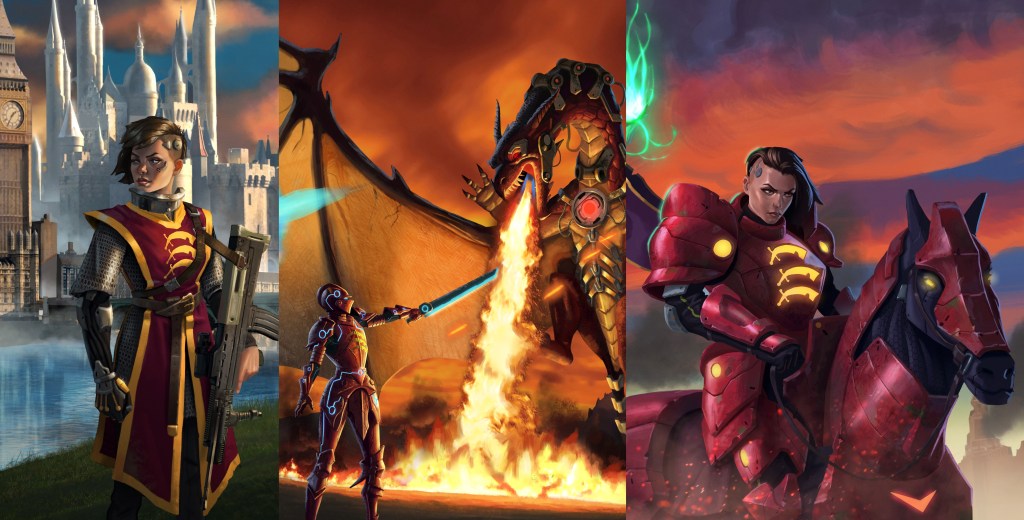
The hardest one is, if you get that contract and go through the editorial process. It’s easy to look at adjusting a manuscript for public consumption as diluting it. Not every publisher wants a controversy provoking, punk, cynical satire that’s going to inflame any of the many ongoing social issues alight in our world today. If you think my first trilogy Camelot 2050, a chivalry-punk piece of futurism based on an extension of the Arthurian tradition, isn’t a poke at the porcine powers-that-be and their blatant disregard for the duty and authority with which they are charged, you’re very wrong. Likewise my zombie horror/isekai Litrpg Rendered Flesh is rooted in the socio-political commentary traditions of the best of the genre, and my latest piece, Riding the E-Rail is a gender-fluid, post evil-empire, cheerfully nihilistic space adventure. I do commentary, even if it’s not immediately apparent.

Now, originality isn’t always going to reach the audience via traditional publishing. The staid establishment is always looking for “The Next…” (Twilight, Harry Potter, Game of Thrones *le Sigh*) so the likelihood of them taking a risk on anything new is slim. Each of the properties above was pushed because it was built on a well established market.

The important thing to remember is that, if the editor presses to ‘tone down’ or ‘rework’ something that you feel is central to your message you can say “No.” Don’t let the thrill of relief of having a contract compromise the integrity of your work.

Now you’ve established the rules, you learn how to break them.

Let the program pick over your grammar, punctuation and spelling, but choosing between a succinct or verbose sentence, flowery prose or matter-of-fact is your choice. Also remember that Dialogue is a place to break the rules and the bot can’t always help you with that.

Take advice you trust, art isn’t formed in a vacuum and, being subjective, it’s always a good idea to seek a different perspective to make sure your point is coming across how you want it to.
When you get an Agent/Editor listen to their advice and then think about what you want. Do you want to sell books? Or do you want to sell them to the right audience? Both are valid but remember, most authors don’t make a living wage off their work, most have day jobs too. Also, the best advertising is word of mouth, two-hundred sales who like your book isn’t as good as twenty who *love* it. 

I Read/Write Fiction – Congratulations, You’re a Sociopath!

Fiction fans? Sociopaths? Never! Well, not really. But! We do like to see characters getting what they deserve, whether it’s the honest cop getting a medal for taking down the criminal element at the precinct, the loveable underdog thief making it off with the amoral billionaire’s money or… the villain of the piece getting their final comeuppance. We all love to observe justice being done and, in the world of fiction, there’s no two-ways about it. The villain done bad, we saw it, we rode along with it, we heard their flawed justification for their actions and (mostly) we decried their logic and waited expectantly for them to get theirs. Morally justifiable villainy is becoming more common wherein it’s the actions rather than motive or goal that’s the criminal part, but that can be played into anti-herodom and it’s a more complex subject overall. For now, straight-up villains is the subject.

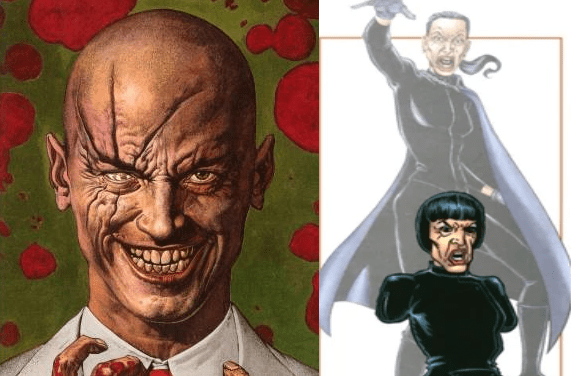
Herr Starr – Preacher, Vertigo Comics , Ma Gnucci – Punisher: Welcome Back Frank, Marvel Comics, Garth Ennis/Steve Dillon

The question is, “How do we satisfy the audience that ‘justice’ (a purely subjective term liable to be interpreted differently by a host of readers across the fan base) has been done?” How do we balance the scales in a satisfying manner? Of course there is the aspect of Genre. In the cases of Hercule Poirot, or Miss Marple, having your scheme outlined before a jury of your peers before suffering a cutting remark and being arrested will suffice. In many cases the villain is defeated, only to make a last gasp attack that results in them killing themselves (think Lord Chen – Kung Fu Panda 2) or the hero kills them, either grudgingly or as the logical conclusion of the plot.

Of course, then there are the examples pictured above from the Ennis/Dillon collaborations on Preacher and Punisher. Both Herr Starr and Ma Gnucci go through the ringer before meeting violent ends (Ennis does like to muiti;late his villains). So, taken away in cuffs? Or thrown from the train? How do we achieve narrative satisfaction? What is justice?

Initially the scale of response to a villains crimes is established early on in the tone of the book. It wouldn’t make sense for Miss Marple to gun down the vicars wife who poisoned her estranged sister with a victoria sponge over the family inheritance. Likewise John Wick doesn’t hand his enemies over to the police for a fifteen-to-twenty stretch or outline their dastardly schemes in front of their social peers. Once tone has been established, whether our protagonist plays by the rules or gets the job done kind of thing, are the authorities to be trusted? Or in the employ of our villain? Then we set the level of expected repercussion. In a teen drama you might expect an elaborate prank played on the bully before they are outed and sent to military school. In a spy novel, the evil genius might be dropped into the scalding water of the atomic reactors cooling chamber (Doctor No – United Artists 1962).

We tend to gain points with the reader for creativity, a little ingenuity in the demise under certain circumstances is appreciated but, sometimes a very clear clean ‘Bang!’ ending is the required payoff. It can be satisfying for the villain to bring about their own, ultimate demise, usually as a result of some kind of attempted underhand final attack or simply by their own refusal to accept that they were wrong/are beaten.

Of course, maybe the sign of a deranged mind is not *What* you do to your villains (or victims) but *How* you do it, that is, how much detail you go into. I like my horror, I read the Rats trilogy by James Herbert at a formative age. Desperation and The Regulators by Stephen King sit on my shelf, also creature horrors like Jaws by Peter Benchley and Jurassic Park by Michael Crichton (and it is, in places, the book goes into much more detail than the film). But between horror, fantasy and science fiction, where do you draw the line at too much gore (gore being the measure of detailed description about the fate befalling an unlucky character)? Again, it’s a bar you ought to have already set earlier in the book. You can’t ambush your reader right at the end with an in-depth description of gut-wrenching visceral imagery if you haven’t done so already. Some readers aren’t prepared for that, and those that are? They’re probably asking where was this fifty to a hundred pages ago?

Of course there are the gore-hounds and there are the people who think less is more. A few well-crafted hints about what’s happening can terrorize an over-active imagination and, by far the bulk of fiction readers are in possession of one of those. So what is the worst way for your villain to go out? Death by drowning/suffocation? Maybe, if it’s actively at the hands of the protagonist, supposedly it’s quite peaceful once you overcome the panic and reach the stage of acceptance, or so I’ve heard. Massive trauma, car accident or crushing? Maybe, it covers a multitude of violent death scenario’s, and it’s something hundreds of thousands of people around the world have real experience of. Anyone who’s fallen off a bike, been hit by a car or been in a car crash will be able to identify and it’s that connection with the reader that is a powerful tool when writing a narrative. Long fall, opportunity to draw out the moment, have the characters reflect or observe the villains reaction as they drop, think Hans Gruber or ‘Ma-Ma’ Madrigal. Death be fire is a grisly business, as is being eaten alive, both tap into areas of primal fear, those things that scare our animal ancestors still scare us, and for good reason.

No matter what you decide to do to shuffle your antag off the mortal coil the best deaths tent to carry a hint of irony, that balancing of the scales that gives them a taste of what they’ve been dishing out. In fantasy and science fiction the idea that the villain is going to die is almost a given but it’s the satisfaction for the reader that, like every other part of the book, really has to hit home, a bungled ending can sour the entire reading experience and that makes the reader remember you for all the wrong reasons.

So what is it for us, the writers and readers? Is it justice? Vengeance? A response to the day-to-day unfairness we see in the world around us? Well, yes, sometimes. Most of the time I think it’s just narrative. We emulate what has gone before and what has gone before is drawn from history. Let’s not forget the unjust rulers who were killed by a red-hot poker in the bottom (Edward II), or stabbed up the guarderobe (Wenceslaus III), suffocated under a pile of clothes (Draco) or lured to their death in a fiery pit (Susima). Remember, when offing your antagonist, this is the payoff. It ought to be memorable, and appropriate to their actions, but don’t let yourself get too indulgent in the act, or people might really start to believe that you’re a little cracked yourself.

Patience and Progress

Alright, been a while since I posted a Blog but, honestly? I haven’t felt that I had much to say recently. In fact, things have been getting harder and harder for a while now and I’ll tell you why. Having landed the contract for E-Rail I was immensely excited, and also terrified. One book written, a three-book series signed and a (soft) deadline, I was energised and raring to go but, that was nearly two years ago now and, while we have commenced editing on book one I don’t have a release date yet and, while I’ve had no new titles out, showing my face at event after event with the same catalogue of work has gotten harder.

When I started releasing books I said I wanted to release at least a title per year. Looking around at some of the more prolific authors out there and measuring my own output over the course of Camelot 2050 it didn’t seem like an unrealistic goal. For me, I thrive just after an event, meeting people, talking about writing, projects and things ennervates me but, after a while, I really want to be able to produce the results of those discussions, those ambitions. I feel like an hourglass and most of the sand is in the bottom bulb. I need a release to flip me over and start the sand moving again.

It doesn’t help that it’s been the holiday season and (for personal reasons) I won’t be back on the con scene until May time but I’m champing at the bit to show you all E-Rail and the product of over three years of work. Nothing against my publisher, they are busy. Vulpine is a small-team, fast-growing label pushing new releases seemingly every week and, while I’m impatient for you all to read E-Rail. I want you to get the very best out of the experience and that demands a thorough and thoughtful editing process.

So that’s the patience, where’s the progress?

I’ve mentioned the projects I’m currently working on, also my plans for the con scene later this year. I’ve applied for MCM London and I’m appearing at Worldcon Glasgow. Portsmouth Comic Con and a slew of other Litcons are also on the cards. I’ve made some good progress on the new projects I’m working an and, since I’m not currently working to contract, I can bounce about and see which one stirrs my imagination (whoever that’s a double-edged sword too, I feel somewhat directionless at the moment).

Currently I’m actively working on a prequel to Rendered Flesh, my Guy Ritchie inspired urban fantasy, Ruin-Nation a collaboration with S.G. Mulholland, and the first book of the next Camelot 2050 trilogy (cunningly titled Camelot 2052).

I know that, once I get E-Rail book one out there and maybe do an event I’ll feel much better but, for now, the phrase ‘It’s not a sprint, it’s a marathon‘ never seemed so apt.

Plotting or Planning or (Possibly) Scheming

For many of us the Winter is a dark and, frankly, depressing time. The days grow shorter and colder and the departing light and warmth seem to take our motivation with it. Sometimes that’s alright, dialing back our efforts, ‘hibernating’ our creativity needn’t be a bad thing, but not this year, not for me. I have plans, of yes, I have plans.

2024 is a Worldcon Year, ‘But they’re all Worldcon Years?’ you might reply, ‘Yes indeed‘ I’d counter, ‘but I’m *going* to this one.’ Glasgow Worldcon 2024 will be the second of its ilk that I have attended since Dublin 2019, what with Covid scuppering my Chicon 2022 plans and all. Still, Dublin was a very successful event for me, and I’m not about to rest on my laurels and hope that I do the same again. Greater efforts reap greater rewards after all.

So, first things first, Camelot 2050 – what’s going on there then? The answer? A lot. First stop, Promotional material. My standee’s are long overdue some attention. I plan the get a single stand printed to represent the Camelot 2050 Trilogy making the best use of the artwork and quotes. Not only am I intending to update my standees but the books themselves are getting something of a tune-up. I’m doing a thorough re-edit, no major changes to story but certainly a wash and brush-up of the prose, given how much I’ve learned in the intervening time between first release and now. I’m going to find someone to revamp the covers too. Don’t worry, the stellar artwork isn’t going anywhere, but definitely the arrangement, title and blurb. It’s about time I got them up to snuff on that front. I’m also planning a range of bookmarks with QR codes to link to this very site.

Next on the docket – Riding the E-Rail, I want to have the first two books out before Worldcon opens it’s doors and I’m planning to have a big launch party for the third and final installment of the series at Glasgow itself! This is going to involve a new standee, pin-badges and possible bookmarks. At present I’m working on a simple little ‘No Humans’ design, it’s in a proto-iteration, but here’s a sneak peak…

It’s a work in progress and I have one or two ideas to make it stand out a bit more.

Of course there are my other projects that I am pushing forward with, as hard as the stern overseer we call ‘motivation’ will allow. Ruination, Rendered Flesh: Alpha Access, and the first novel in the Bentley Pennywhistle Stories are all vying for my attention right now alongside some other ideas, rather less defined as yet.

In terms of events, everything revolves around Worldcon. I’m rather hoping that the Young Adult Literature Convention returns to LFCC Summer (which will at least go some way to justifying the cost) but, beyond that I’m having to shelve a number of my regular conventions in favour of Glasgow. Portsmouth FCC is still on the calendar, as is Fantasycon, and I’m not missing *another* Bristolcon, not with new releases to offer.

I am also looking ahead to 2025 and making plans there. World Fantasycon is coming to the UK, I’m not sure what the scale or associated cost of the event is going to be, but I’m going to be there. I’m also looking at starting the application process to get into MCM events, either in London or Birmingham. At a rate of around One Book per Year I’ve got more than a decade’s worth of stories to right so I’m not too concerned about new concepts at the moment and (somewhere along the timeline) I *am* going to return to Camelot 2050. In the meantime, busy, busy, busy. There is much to do and little time to do it before August rolls around so, should I be rather more absent from this blog than ususal, I hope you’ll understand. I should have plenty to talk about next year.

Let’s do this Right… (or at least Better than we did it Before).

Representation is something that is very important to me, not because I have anything particular to represent, but because I know so many people who do who have no platform or are outright afraid of the negative attention it might draw their way. Let’s be clear, representation is not about ‘Brainwashing’ or ‘Overwriting Traditional Values’, it’s about giving a more accurate cross-section of the society we live in, it’s about discouraging false, inaccurate or harmful stereotypes and generating empathy through familiarity, the familiarity of life through a lens. Prejudice is not inherited, it is taught.

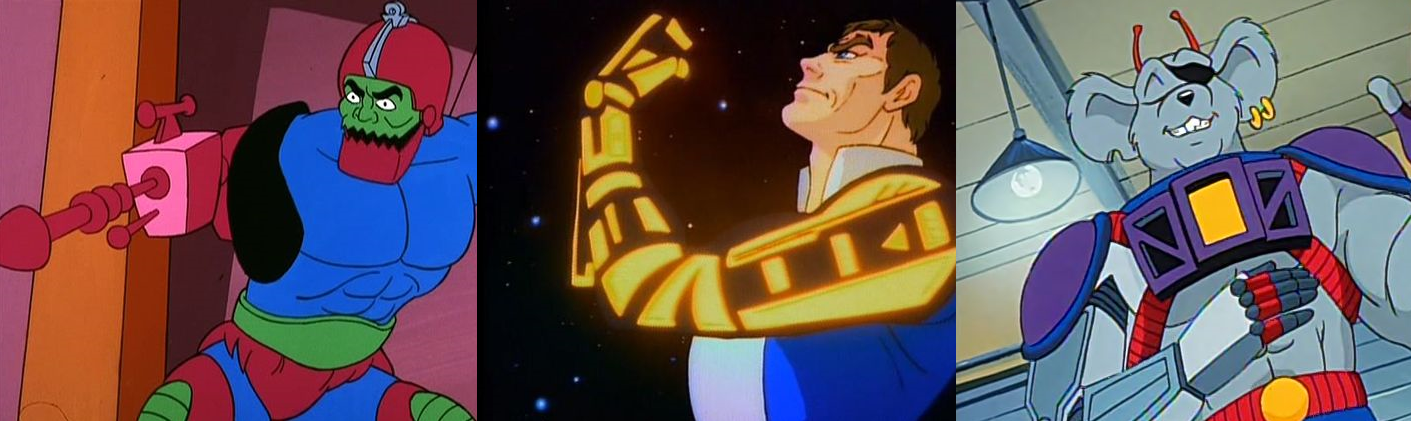
So, when talking about representation, one of the more overlooked areas (because it’s not such a controversial political hotbed) is disability rep. One of the enduring influences in my work is the Saturday Morning Cartoons I watched in the late 80’s and early 90’s. Many of those properties feature characters with bionic limbs or implants. At the time I never considered these characters as disability rep and after a round-about mental journey and some proper education I still don’t.

Trap Jaw – He-Man (Mattel 1981), Zachary Fox – Galaxy Rangers (Transcom Media 1986), Modo – Biker Mice from Mars (Disney 1993)

The problem with calling these Saturday morning heroes as representative (aside from the massively male-dominated pool of source examples) is that, in most cases their bionics or prosthesis work as well or even better than a flesh and blood limb. Usually they bestow some power or ability and rarely do we see any particular downside. On the rare occasion that the reliability of the limb is called into question it’s usually as a ‘dark temptation’ ploy where the hero is offered a superior model by the villains. Pre-teen me didn’t look at these characters and think “Oh wow! Disability rep!” what I actually thought when I watched these shows and saw a bionic arm was “Cool! When do I get mine?”

It’s an easy trap to fall into, especially in the genres of Fantasy or Science Fiction. If your world relies on physical ability for the relatively simple narrative principal of travelling from place to place via horseback or if your settings medical sciences are still at the most formative stages, then you might think it out of place to have a disabled character. To that I say take yourself to the internet and make a study of the Paralympics Equestrian events, and that’s just for a start. I’m not usually one to bring up A Song of Ice and Fire (George R.R. Martin 1996) but it’s the most mainstream property I can think of to have a disabled character in the main cast – King Bran the Broken. Having disability in a fantasy property isn’t in anyway unrealistic, (stone age societies could drill holes in peoples skulls to relieve pressure on the brain, a procedure many survived) and if your main objection is that it’s ‘inconvenient’ then, truthfully? That’s just lazy. If you don’t think you can do it right? That’s a fairer excuse. Writing is a skill that improves with practice, as is researching.

In Science Fiction we come across the opposite problem, it’s too easy to *think* we’re doing disability rep through the medium of bionics or advanced sciences when, in fact, all we’re doing is contributing to disability erasure. Having bionics is also used as a fight scene mechanism, allowing for a protagonist to be ‘injured’ or limited without anyone actually getting hurt but, quite obviously, if you were to drag my arm out its socket, break any one of the bones, or tear the major muscles and ligaments, I wouldn’t be very combat effective either. I’ll admit, when I wrote the character John Loxley in Camelot 2050, I wasn’t even thinking about representation, I was paying homage to the characters I enjoyed who had bionics. I’ll also admit that, later on in my enthusiasm, I might have thought in retrospect, that I *had done* disability rep without being aware of it. I was wrong, as this article illustrates. I don’t include Jay from Rendered Flesh either; the reveal for that character is a late-stage knife to the heart for the reader (trying to be vague so as not to spoil if you haven’t read it). No, my ‘better’ disability rep is to come in Riding the E-Rail (which is in editing and should be going to print in the New Year).

I have included bionics in E-Rail, prosthesis designed to help amputees but, I have gone further. In writing the ship’s Doctor, ‘Doc’ Rammitz, I created a character afflicted by a condition brought about by a chemical weapon that attacks a species genome, inflicting a condition not unlike Muscular Dystrophy. Of course, many diagnoses like that have sympathetic (or not!) conditions and I have a number of friends with Fibromyalgia and Myalgic Encephamyelitis (Chronic Fatigue Syndrome) and many of them are *the same friends*. Anything that impacts significantly on your quality of life is very likely to have knock-on effects. Now, while Doc’s condition isn’t the story what’s important is that the way that it is approached within the narrative. Firstly, it’s incurable and it is acknowledged as such, there’s no desperate bid to find an advanced technology that can ‘cure’ Doc. The impact on Doc’s health when the character is, at one point, force to operate without their usual support apparatus is massive. And I included a planet so styled and polished by its corporate identity that facilities to accommodate disability are largely unknown. Doc is even uncomfortable setting foot on it, feeling that they will look ‘unsightly’ struggling to get around, a problem absent upon most other planets/places but altogether too common in our own real-world.

In case you’re wondering, the condition brought on by the bio-weapon is called ‘Erasure Syndrome’.

So, while I won’t claim to be the best at representation, or even very good at it, I can acknowledge how far I’ve come in a short span and my ongoing attempts to be sympathetic in my examples of representation, even while I employ them to make scathing commentary on the short-comings of our society in including those communities I’m trying to represent. The most important thing to remember all the while though, is the phrase “With Us, Not For Us”. You need to try to understand those people who are the focus of your representation, talk to them, show them before you publish. The value of Sensitivity Readings cannot be undersold and that is ‘having someone from the group you are trying to represent, who lives with that condition/bias/stigma every day, read your work’.

In a world that is becoming less and less empathic/caring/understanding every day, where simple differences of identity/lifestyle/ideology are weaponised against innocents, representation through Media is so, so important. It’s easy to be made to fear that which you don’t understand. Knowledge is the enemy of Fear, not Courage. But, to have the courage to stand against those who employ fear as a weapon? To stand up and say ‘I want to be an ally’, that is a way forward for us all, together.

Divided We Stand?

You will often hear me saying that “Other writers aren’t competition.” and this, by and large, is true. The pool of readers among whom we disseminate our works is vast with wide-ranging tastes and, in the majority, someone who reads Adrian Tchaikovszy’s work isn’t going to snub Gareth Powell or Kameron Hurley simply because they aren’t Adrian Tchaikovsky.

But, there are divisions in the industry based upon genre and your likelihood of getting published and how you get marketed after publication can depend upon how you phrase your pitch, for example;

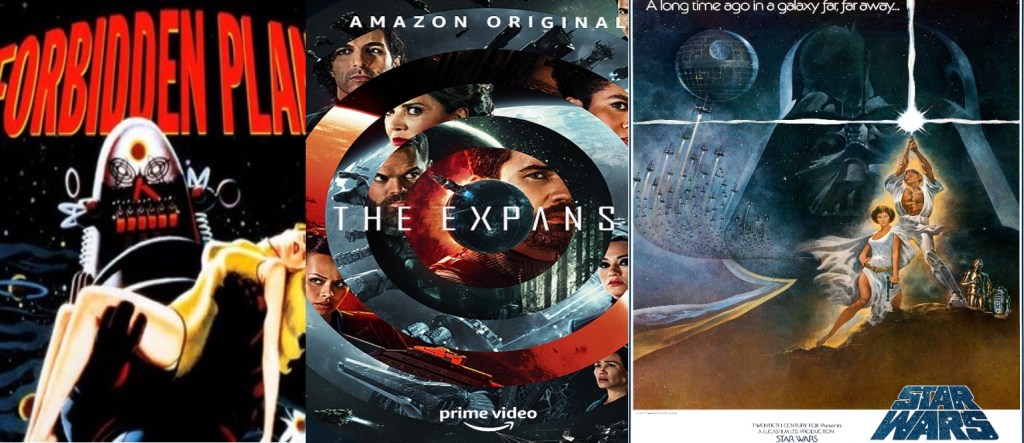
Sci-fi/Hard Sci-fi/Space Opera

Forbidden Planet (1956, Warner Bros), The Expanse (2016, Amazon TV), Star Wars – A New Hope (1977, 20th Century Studios)

The differences in these cases can almost be dialled down to… Something Happens in Space, Something Happens in Space – There is Maths, and A Big War Happens in Space – Cue Chivalry, Romance and to Hell with the Laws of Physics.

Of course, securing a breakdown of specific information is quite an involved web search but, while WordsRated.com has the U.S. Market for Science Fiction (combined with Fantasy) accounting for nearly Six-Hundred Million dollars (domestic) they also state that less than 5% of authors make a living from writing alone.

Both Science Fiction and Hard Sci-Fi can be regarded as trying to retain a certain amount of realism (whether there are aliens or not). Star Trek (1966, Gene Rodenberry) frequently straddled the line between Sci-fi and Space Opera but the difference between ‘Hard’ and ‘Soft’ science fiction is the attention to detail. Theoretical Physics, Mass-Velocity Calculations, actual maths in application and, make no mistake, there is a massive market for it. However, more and more the lines are blurring back into each other. You can have a massive, over-arching space war with romance arcs, seat-of-the-pants and ventures *and* realistic environments, theoretical biology’s and the application of astrophysics.

Horror and Humour

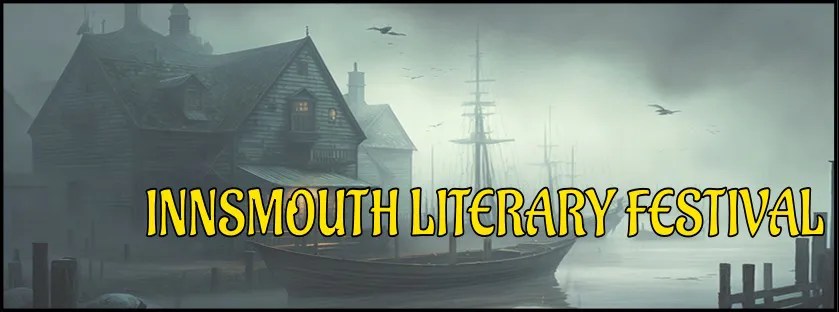
Innsmouth Literay Festival Banner, held 30th Sept 2023 Bradford UK

In my experience of the industry to date I have come across certain attitudes towards several genre’s (at least one I won’t go into for fear of the readership) but in the case of Horror and Humour I certainly feel there is a strong division from the Sci-Fi/Fantasy market. That’s not to say that many, many titles don’t include strong aspects of these genres but, if you push too hard, if your book is too funny, or too horrifying, then you risk getting bumped out of Sci-fi/Fantasy and into Horror/Humour and therein there are risks. Books marketed under the ‘Purely Humorous’ will struggle to find a publisher because humour is so subjective. You’ll find that the majority of authors of successful humour are established comedians themselves wherein people already know what to expect, an unknown is unlikely to sell. Within Sci-Fi/Fantasy, humour is often seen as a ‘poor cousin’ at least by the bigger publishers, which annoys me as I loved the Myth Inc and Phule’s Company series’ by Robert Asprin and, I’m sure, comes as a huge surprise to New York Times best-seller Jasper Fforde. Horror is widely regarded as its own genre, in 2018 a ‘boost’ in sales up to Four-Million Dollars was seen as a domestic ‘win’ for U.S. publishers but, when comparing this to the Sci-Fi figure stated above we should remember that Fantasy and Comics had been included and also (for some strange reason) Steven King counts in the WordsRated list of Top Ten fantasy authors of all time. No I’m not forgetting the Dark Tower but I do wonder if his sales to date have accounted for his vast catalogue of pure horror for the purposes of that analytic. In fact, for the longest time, Horror hasn’t had its own UK dedicated literary convention, getting lumped in with the (admittedly fabulous) more generic Horror fandom conventions. This year marked a change as the Innsmouth Literary Festival marked its inaugural event and, I’m sure, we look ahead to a bright future for that convention and the representation of horror literature on the UK convention scene.

‘Why is it important how I’m marketed?’

Well, the vast majority of readers are very canny; they will identify your book probably as you intend it to be identified. They are open to the representation of subtle sub-genres and genre-mashing. And it’s not that the industry isn’t, so much, it’s just that they like to tick boxes. Focussed marketing is widely believed to yield the best returns for financial outlay; broad-spectrum marketing is a much less desirable cost/return gamble. So publishers like to pigeonhole titles to trigger keyword searches. It doesn’t matter so much in Barnes and Noble, all the Sci-fi goes on the sci-fi shelf, but the physical bookstores account for less and less of the Publishers income every year.

“So Why Don’t They Just Broaden the Keyword Range?”

Another reason for Focussed Marketing is to mitigate damage, the Publisher doesn’t want a title falling into the wrong hands which, for the purposes of this argument, is anyone who’s going to take to Amazon/GoodReads/FaceBook etc and leave bad reviews and bad reviews kill books. That’s not to say that good reviews can’t be damaging too. Too many glowing Five-Stars and people might start to suspect some foul-play; I’ve certainly happened across the ‘Reviews for Cash’ scene, people selling reviews from themselves and their followings. Still, I’m pretty sure the sales execs don’t see it that way.

As I’ve often said, the way to succeed (if not what would widely be considered ‘success’) is to find those readers who will enjoy and value your work for what it is. The surest way to do that is face-to-face sales and accurate representation of your work when marketing. That’s not to say that you can’t cast your keyword net wide but your blurb will be the first thing that comes up in that search so, if there are wildly differentiating elements within your story, you have to be upfront with that. Currently I’m in collaboration on a story that interweaves High Fantasy, Cyberpunk and Post-Apoc settings, that’s going to be an absolute ‘joy’ to set the marketing for!

Banned Book Week! (Oct 1st-7th, 2023)

The Anarchist Cookbook by William Powell first appeared on shelves in 1971, it has since been the target of ongoing attempts to have it banned or removed from circulation, even by Powell himself. It is sometimes cited as a pinnacle moment in Counter-Culture, a step-by-step instruction manual on the manufacture of explosives, improvised telecommunications and drugs. Possession of the book in the UK has been used as grounds for charges of ‘Possession of Terrorist Information’ under the Anti-Terrorist Act and (although few prossecution based soley upon it’s possesion have gained any ground) the book has, in fact, been linked to numerous terrorist attacks since its publication. But should it be banned?

On the one hand, the Authorities are concerned that a title such as this allows untrained individuals access to knowledge of dangerous substances that pose risk to life, health and property, both their own and others. If it’s removal from circulation saves a number of persons from accidentally blowing themselves to bits or overdosing on contaminated drugs then that’s good, right?

On the other hand the Authorities have a grounded fear that this book, in the hands of an educated and forward thinking populace, equips people with the means and knowledge to fund and defend themselves against Totalitarian Aggression and Exploitation by the Ruling Classes. Can’t be handing the oiks tools with with to educate and defend themselves, can they?

But what’s the right answer? *Is* there a right answer? Only if you ask the right question.

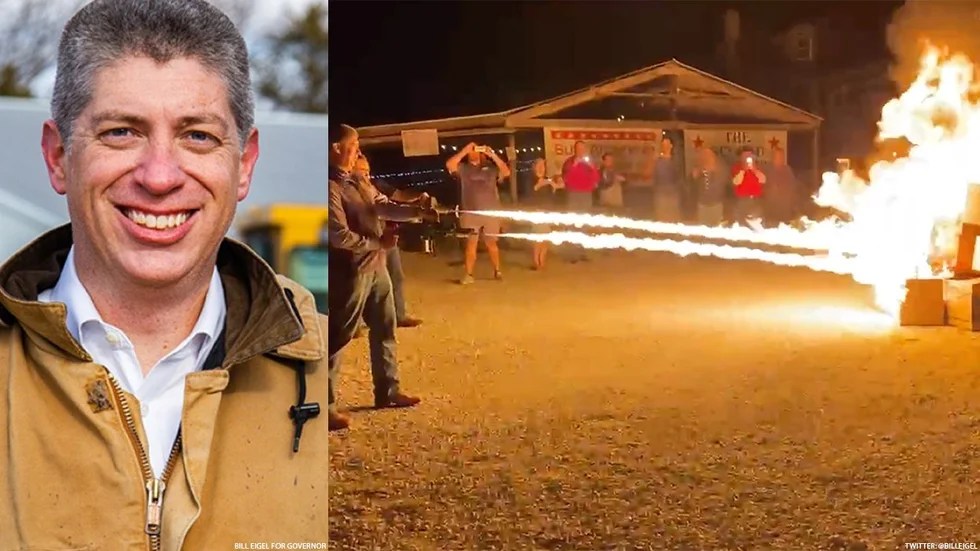
Missouri State Sen. Bill Eigel burning boxes of ‘Woke Pornographic Books’ at a Republican Rally in Charles County

The rise of book burning in Right-Wing Christian America and across the globe is something that should concern us all. Many things can be deemed ‘dangerous’, Explosives, Guns, Cars, Travel to Certain Countries, but, with the proper Education, Preperation and Moral Foundation an informed individual can then make a choice as to whether they wish to engage with these things in a way that is both productive and relatively safe. Personally I abhore the philosophy around the creation and continued development of guns and weapons but, as a gamer and as a younger person I can shoot and have shot (both target and clay pigeon). I take some pride in my marksmanship and am constantly fascinated by the science and innovation of ballistic technologies all the while disagreeing strenously with the philosophy, bigger weapons don’t make you safer.

Certain regimes have come to the conclusion that certain ideals are dangerous and constitute a threat to their way of life, Socialism, Activism, Different Religions and People who are LGBTQ+ are somehow a ‘threat to us’. Of course their definition of ‘us’ is a very narrow one indeed centred on race, class, income and religion. And so they attack these populations by ‘othering’ them, creating an ‘Us vs Them’ situation of scapegoating and fear but, that tactic cannot stand in the face of Knowledge. If the wider population get to learn more about these people, get to feel sympathy for them and their struggles either through fiction, biographical accounts or even coming to understand their culture by reading their own literature or scripture, then they might see all the similarities, rather than the spurious accusations of the State or Church. So comes the purge, you can’t learn about people if there is no material to learn from. Any TV shows or Movies with representation are picketed and protested, educational materials/literature in schools are met with calls to censor and books currently in circulation are burned. Ignorance is the weapon of Totalitarianism, you can’t feel for you ‘enemy’ if you don’t know them.

Historical Book-burnings from 600BC to Present

So what about titles like The Anarchist Cookbook, Mein Kampf, Harry Potter? What about titles that espouse hate, segregation and superiority? Well, much like a gun, they’re not dangerous until in the hands of a human being and, even then, if that person can see the danger and appretiates the harm they can do then these works can serve as a warning. Books aren’t dangerous, weaponised ignorance is. Fascism thrives in the dark. If we forget, the world grows darker. Shining a light, via education and understanding is our way forward, our opposition is understanding the circumstances that create the Fear that empowers Fascism, Inequality and Hatred and combatting that.

So, for continued Reading, here’s the link to the Banned Book Week Website, including the list of the most challenged books of 2022 (Spoiler: Most of them are LGBTQ+ Positive). The Honorary Chair this year is reading advocate and actor Levar Burton and good luck to everyone involved in raising the perception and understanding of this issue.