Self Publishing Re-Revisited (2026)

It’s been a little while since I’ve touched on this topic but I feel it’s important to revisit it as it is a daunting prospect for starting out, self-publishing authors. In this blog I am going to attempt a concise and structured how to guide that will bring your manuscript from a final, edited Word (or whichever format you use) into a final, physical copy that you can hold in your hand.

Since I first self published back in 2017 things have changed, but maybe not as much as you might think. While going to Google and searching for ‘Self-Publishing Services’ might seem like the most logical thing to do there are many traps out there for the unwary. The convenience of the ‘Vanity Press’ theoretically in the availability of in-house editing, layout and cover design options and, speaking honestly, those are services most of us really do want access to. But those services come at a cost and, while you may think you can’t do such things yourself, I’m here to assure you that, with a little patience and practice, you can. Similarly jumping onto Amazon Kindle Direct Publishing (KDP) might seem like an ‘easy’ option but, I promise you, there is a better way.

Writing is a joy, Self-Publishing can be a trial

My own research into self-publishing led me to an article that recommended using two services, IngramSpark and CreateSpace. The theory was that by listing your novel on Ingram you gained access to their huge print-on-demand and distribution (not promotion, just distribution) facilities, and then, to source whole-sale copies for yourself, use CreateSpace if attending events to sell your titles was your goal. Seem a little complicated? Well, it’s not so anymore since Amazon subsumed CreateSpace and, honestly, I just use Ingram anyway because of their print quality. And, at times it might sound like I’m simping for Ingram but, honestly? I’ve never had reason to look elsewhere to get my self-published works printed.

The first step is preparing your manuscript for uploading, there are guides out there, Ingram has many on their site and there are YouTube tutorials galore. The very first thing you’ll want to do is pick your page size. Way back when a standard paperback was 178mm x 107mm (7”x4 ¼”). That is still an option but with increased waste the unit prices are slightly higher. More commonly self and small press releases fall around 225mm x 148mm (8 ⅞” x 5 ⅞”). Once you’ve resized your pages (save as a new document, do not use your master!) you’ll then want to adjust your border (remembering to set a mirrored gutter of 0.5cm for binding), smaller pages only need 1cm, larger pages will accommodate 1.5cm but you don’t want to go much bigger than that. More white space means more pages which increases your unit coast, but you want enough space for the reader to be comfortable. You should also adjust the Header and Footer boxes as they will eat up page space too! Then pick a font. Times New Roman 12 was widely considered industry standard but Helvetica/Calibri are reasonable choices (Sans-serif fonts are easier for dyslexic readers or you can license a dyslexic friendly font at a cost). You’ll want to set them to maybe 11, but the final choice is yours. Whether you go serif or san-serif is a style choice, just *Don’t* use a cursive font, you will put off so many readers.
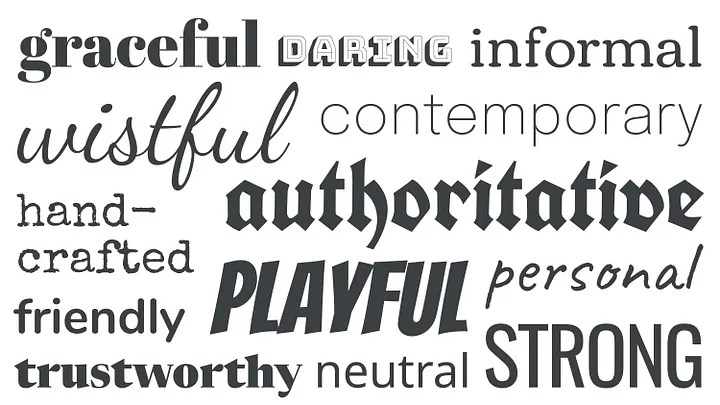
Image Courtesy of How To Choose a Fontby Devyani Jain

A lot of these may seem like nothing choices, who cares what font I use or how much white space is on my page but, by emulating industry approaches you’re engaging with a readers familiarity, and familiarity breeds comfort. Whether you leave your page left-aligned or choose to justify is one of those gray areas, some publishers do, some don’t. But, page One should be at the bottom of the first line of actual story beyond the title page, so, Section Break at the bottom of the Title Page, Page Breaks at the end of each Chapter. A Chapter should start on a facing (odd numbered) page but that again is not a hard and fast rule. Many publishers choose not to leave any blank pages which this approach can generate.

So, you’ve page sized, formatted and laid out your work, made sure no notes or highlighted sections remain. What next? Well, the first page ought to be a short authors biography, nothing huge, maybe two-hundred and fifty words and possibly a list of your social media links. The next facing page is the Title page on the back of which is the standard legalese declaration that can be found in any marketed book. Date of print, date of copyright (European and UK books are automatically registered for copyright, American works need to be registered with the appropriate authority). This page is where you will list your ISBN or International Standard Book Number. If you want your work to be available to retailers or readers via Print-on-Demand services you will need one of these. If you want to run an E-Book you’ll need a second ISBN, if you want to do a hardback edition you’ll need a third. In the UK ISBN’s are sourced from Nielsen and it’s a simple matter of making an account and buying as many as you need. They become much cheaper the more you buy so, if you think you’re going to write two or three books and run E-Books alongside physical copies, it’s cheaper to buy Ten Prefix ISBN’s that six, or even four individually. Bear in mind that this is your passport to online and international sales, it’s worth it.

If you choose to have a Foreword that comes next, or a contents page or anything you want in before the story, then a final title page and then the story itself. Once you are happy with this arrangement you will want to convert the file to PDF which is easily done via Adobe or an add-on programme such as Foxit Reader. Importantly, what this will give you is your final page count (rounded to an even number) which is important for the next step.

Once you’ve created an account with Ingram (free, I can’t speak for other services) You will be presented at the Homescreen with the option to Add Title. This is the stage where you add all the metadata for your book, Title, Author, Contributors and such. It also allows you to put genre tags that will cause your work to show up in online searches. You’ll also have the option (Under Tools and Resources) to, by typing your ISBN into the bar, request a cover template for the book. The ISBN allows a barcode to be generated, you’ll have to choose from a couple of options like paper-quality and size, and tell it the page count but, once the template is emailed to you, then the fun can begin.

Do you remember all the money you saved by not going to a vanity service? Well, you might need it now. Covers are arguably one of the most important ways of drawing new readers to your book. A good cover draws them in, makes them want to know what this is all about almost as much as a beguiling title. Whether you pay for art, or have a go yourself (again, I discourage the use of AI, not only will your art be unprotected by copyright but you’ll alienate a large group of dedicated readers) creating a cover is an important step and, as with the rest of the process, do read the guidelines. If you want an imprint logo on your spine do remember that Ingram and Lightbox forbid the use of their own logo’s for this purpose, you’ll have to come up with something yourself. I’ve heard of and had issues with uploads to Ingram but, almost every time, it was because of something ultimately avoidable;

-Something outside the safety lines,

-An embedded font (not such an issue these days)

-A colour palette present in a file uploaded for a black and white print run (which can be ignored by a simple click-box option on the notification screen)

Or, most recently for me,

-Because I forgot to set my Graphic Design programme resolution to Three-Hundred Pixels per inch.

Once the cover is assembled and converted into PDF format you can upload the files, for free, and once you’ve fixed any niggles or issues (usually by rereading the guidance files and looking things up because Word has included something utterly extraneous) you can finalise and await or download you Eproof document to review at your leisure and I cannot over-emphasise how important this is. What I am happy to say is, not only are the days of initial file-upload charges gone from Ingram’s business model, just recently they did away with revision file upload charges too. So now you can tweak and update your story to your heart’s content! Once all that is done I strongly advise buying a test copy and, should stock for an event be what you want, be sure to give plenty of lead-time. And this is something you should be mindful of whoever you print with. I have a horror story of a young(er) self-pub author rocking up to a major convention only for the Amazon delivery of his debut novel to not only not be there, but to not arrive at all for the five-day event! The reality is that there is a lot of cross-pollination between the companies offering these services and the much smaller number of printers that they use. Small runs almost always take lesser priority to larger ones and may also suffer from lower QC standards in the name of minimising waste (although the quality of stock I’ve received in my time been unquestionably good).

So, there you have it. Not exhaustive by any means, but quite comprehensive I assure you. The devil is in the detail and reading the guidance and exercising patience will get you there in the end. There are a couple of extra steps to creating an Epub file for distribution but (and this is another reason I use Ingram) once it’s done and uploaded Ingram can have it listed on the majority of popular E-Reader platforms. So, I encourage you, go out and look at what’s available, check the reviews (off-site as well as the ones they let you read) and inform your choice. And, if you feel Amazon Print-on-Demand is the way to go? Who am I to stop you?
Just Don’t Use AI – For Real

The AI argument has been going on for a while now and, far from being reticent to make my own opinions heard I’ve been telling everyone I can ‘Just Don’t Do It!’ ever since Grammarly (which has more in common with the planet-destroying-plagiarism engines than you might think) but, the time has most definitely come to lay everything out from start to finish.

Philosophically, the moral imperative of technological advancement is to improve the lives of the masses, reduce the time we spend on the things that must be done to survive and allow us more time for the things we want to do to live, to enrich our lives. Now, objectively, the overriding reasons not to use AI are moral arguments. Our Global situation is that climate change is happening and one of the features of that is a fresh water deficit; that is, there is not enough fresh drinking water for everyone on the planet. This data is measurable and observable over time in the form of annual or persistent droughts. Here in the “Temperate” United Kingdom, a place famous for jokes about constant rainfall, we’re seeing ever more record-breaking high temperatures during the summer and hosepipe bans becoming an annual thing. While the water/energy usage argument goes back and forth what is clear is this; everyone who uses Generative AI is using half a litre of water to write a 100 word essay, or fill in an art-prompt or write a short fan-fic. On top of other global misuses, mismanagements of water, this is a very bad thing. And, on top of that, AI data-centres are just going to become more numerous and, as the codes become more complex, more demanding of both water and power.

That’s not to say that AI doesn’t have its place. There are areas of specific scientific and academic study where I’m sure that the moral and responsible use of AI is justified. However, in our late-stage capitalist nightmare what actually happens is that technology is employed to cut the overheads and increase the profits of the oligarchs by allowing one employee (or preferably no employees) to do the work of a hundred. The reason for making these systems available (even in a limited capacity) to the public is to get as many people saying “Oh, wow! Isn’t this cool!” so that they’ll jump to the system’s defence the minute someone says, “You know, this might not be as cool/safe/morally blameless as you think.” Let’s not forget that Grok was recently exposed as allowing users to make explicit pictures of people (even minors!) without consent. Even before that, the usage of vast quantities of material to train various AI models without the thousands and thousands of creators’ permission brought the morality of the exercise into question.

No money paid to creators for using their art to train something that makes them obsolete in the marketplace? Yeah. No.

As with automation, so with creativity.

As generative AI creeps into the creative disciplines the investors in the film, music and literary industries search to remove the human elements (who want to be paid for our efforts) with these Generative algorithms at every stage, from concept through to execution which is why it is so important for the independent sector to rally against its use. Even worse, in films AI is being used to replicate dead actors. While previously CGI and certain cinematic trickery has been used to have deceased actors reprise certain roles (Ian Holm in Alien: Romulus, Peter Cushing in Rogue One: A Star Wars Story) we are now entering a phase where, rather than body doubles or CG deepfakes, AI is taking the lead. Recently reported in Variety, Val Kilmer is to be posthumously starring in the movie As Deep as the Grave and, while his family whole-heartedly support this move, the project being something he dearly wanted to be part of, it sets a rather dangerous precedent. AI is already writing books ‘in the style of’. Should publishers secure permission from families, and estates how long before new books are being ‘written’ by deceased but still popular authors after the fact? And, from that, how are new talents supposed to compete with well established, though deceased, authors AI ghost-writers?

So why would someone use AI to try and create marketable art? I suspect it comes down to either laziness/frustration/impatience or fear. Like, I have this idea but don’t want to spend a year, three years, ten years committing it to the page only for it to be not as good as I imagined it. The problem is we’re being conditioned toward wanting our results now, convenience is the new go-to selling point and patience, though it may be a virtue, is one we’re less and less willing to entertain. So, given this very capable tool, why should I wait for something that will be just as good as if I wrote it myself and make my money now rather than a year or more down the line?

Well, for two reasons.

1. If you couldn’t be bothered to write it, why should I bother to read it? Is a more common cry among the discerning audience and also…

2. Because it won’t be as good.

Writing, like many other artistic skills, is just that; a skill. It can be practiced, honed, developed and, the more practice you get, the better your skill becomes. By the time you finish that first manuscript your voice as an author will have developed, and as you edit it a few times you’ll notice how much better you’re becoming at phrasing, pace and rhythm. And this is the area where AI falls down.

In diving into this subject I was fortunate to encounter a couple of eye-opening videos on YouTube by Developmental Book Editor – Alyssa Matestic, the first of these was, I Read More AI Stories… And I’m Scared for Us. The video summarises an experiment run by Mark Lawrence on his Blog in August 2025 entitled So… is AI Writing Any Good? Part 2. For this experiment Mark approached 4 human Authors and pitted them against ChatGPT5 to write short flash fiction based on the prompt:

“Write a piece of fiction (of 350 words) based on ‘a demon’.”

Those stories were then rated by visitors to the page who could also vote whether they believed the pieces where human written or AI generated. Now, while it’s true that the results of the online voting placed two AI pieces into the top ten ranked overall, Alyssa’s assessment of the pieces assembles a toolkit by which AI generated work can (in this day and age of deep scepticism about who is using AI and who isn’t) be identified. And, while not a faultless system, it is perhaps more nuanced than identifying who’s using EM Dashes and groups of three/five things and phrasing like ‘Not x, But Y’ which has become commonplace in non-fiction/the corporate world.

From reading the pieces it becomes apparent that the AI generated examples are heavy handed, repetitive and melodramatic with metaphors, those that they choose to employ often seem jarring or out-of-place in the context of the setting. They also have a clunky and inconsistent command of detail. This stretches further in long-form narrative as they can’t seem to hold continuity together over novella/novel length pieces. When working in the first person or dealing with interpersonal exchanges the AI comes across as impersonal and shallow, unable to communicate nuanced emotions. These points echo findings from the next video suggesting that there are some things which aren’t improving generation to generation.

Can You Tell which Story Was Written by AI?

This video summarises An Experiment in Lust, Regret and Kissing, published by the New York Times in August 2024. Two 1000 word shorts, one by Curtis Sittenfeld, one by ChatGPT-4 ‘In the style of Curtis Sittenfeld’. Again, it’s an interesting experience but the findings of the more recent experiment are almost repeated here.

– AI Stories Feel Vague and Placeless in Setting.

– Identifies feelings and themes too explicitly.

– Tells and Summarises rather than shows in specificity.

– Resolves things too neatly.

Sittenfeld herself says “The story was so boring I wouldn’t have finished reading it if it weren’t an assignment.” and this is why a human artist can always outperform the AI model; humans can be unpredictable.

I’m not qualified to comment on the ‘how it works’ of Generative AI but I do know we’ve been talking about Artificial Intelligence in practice since the early days of computer gaming and those logic-chain driven AI enemies we blasted by the dozen in games like Wolfenstein, Doom and Quake. That system is built on series of pre-coded responses to certain events.  Player comes in range-Monster attacks player, etcetera, repeat until dead. Over time these chains have become more advanced (some even recording a player’s common strategies and countering them) and more complex and we, that is gamers, have taken to referring to it as ‘AI’ even when it’s demonstrably not. So it is with Generative AI, the user puts in the prompt and the algorithm goes to work with an ‘If this happens, then this happens’ chain, working through the massive database of stolen work that it has as reference, which is also why the continuity tends to fall apart in long-form written pieces, because it steps too far away from previously referenced decisions. A human, on the other hand, is capable of breaking those established pathways, making the sequence of events run completely off the rails down an otherwise unpredicted path. We can dig into our own deeply felt emotions for reference on how character would react to subtle stimulus and work at multiple levels, giving our work repeat-read value as the audience delves into the ‘Whys and Wherefores’, not just of the characters’ motives, but of ours.

Fortunately, it seems that the law is on the side of human creativity at the moment. If you feel you want to generate a piece, be it art, literature or music, for the purposes of profit there’s little argument that is going to stop you, but remember, as you seek profit from plagiarism, so will others plagiarise you and don’t assume that the court will be on your side. In April 2023 a judge ruled that the AI created art for a graphic novel Zarya by Kris Kashtanova was deemed ineligible for copyright as it was not an “original work of authorship” as per the US Copyright Act of 1976. After appeals the application for the text and arrangement was upheld. More recently March 2026, Thaler vs Perlmutter, the Supreme Court ruled that AI may not be listed as an author for the purposes of copyright. That means that, should someone take your AI generated manuscript, put their name on it and sell it for their own profit, you will have no legal recourse to take the work (or subsequent profits) back, you’ll just have to suck it up, buttercup!

Ultimately the main selling point of your material is your passion for it! If you have striven and sweated over hundreds of thousands of words to tell the story that you feel the world needs to hear, then it is a passion that can be communicated, a torch that can be lit in readers that they can pass on in recommendations and (hopefully!) reviews. If the most you’ve done is push prompts into the plagiarism-machine, if you’ve not even read in enough detail to notice the AI prompt replies still within the manuscript, then are you really passionate about your art, or are you just looking to cash in as quickly as possible? Moreover, the audience response to cases where authors have been found to be using AI, and by extension the publishers’ responses, shows that, in actual fact, there is little appetite for AI aided or generated work. The audience overwhelmingly wants a connection with the author/creator, and the use of a machine is seen as a betrayal of that perceived connection.

One of the final failings of AI is that, by predating the wider samples of popular works it is inherently pandering to the lowest common denominator. Now don’t get me wrong, I enjoy a good Marvel Superhero Movie but, I enjoy one that makes me think! And, while we want our works to be accessible to the widest possible audience, sometimes we want to aspire to more complex concepts, higher philosophical heights. Sometimes we want to elevate the narrative and our readers by doing so. And, while the mainstream is mostly looking for the next X, insert derivative formulaic brain-candy here, we as authors can challenge readers while entertaining them at the same time. So please, exercise patience, hone your craft and, no matter what, leave the AI slop where it deserves to be, in the gutter.

*Sigh* The Undeniable Power… of Karaoke

Good News! I can now count myself among the ranks of authors represented by an agent! But how did it happen? Well it wasn’t in the commonly accepted way but then, very little about my writing career has happened in the so-called ‘normal’ way. Before we get into how I did it, let’s look at the more conventional approach to securing an agent.

Submitting to an agent is almost exactly like submitting to a publisher, the agency will have guidelines on their website covering such things as cover letters, synopsis expectations and just how much of the book they’ll accept at the submission stage (usually between thirty pages/three chapters up to a limit word-count). It is ever so important, not only that you follow these submission guidelines, but also that you do a little research into the agent themselves. Each agent will have a page detailing first, whether they are actually open to submissions, and second, what it is that they are looking for. If you’re pitching King Solomon’s Mines Pulp Action Adventure it’ll do you no good to query an agent looking for Murderbot style sci-fi. The inherent difference between pitching a publisher and an agent is that an agent has a much more personal element to it, and that’s what works in your favour. Once you’ve researcher, tailored your package and sent it off, you wait. Ideally you want to be pitching eight or so agents at a time and giving them six to eight weeks to respond.

The very nature of the agent/author relationship means that, as an author, you are looking for someone who is going to give you the very best representation that they can, and that’s a whole lot easier when they like your work. The best results are going to come from the best relationships and that works both ways. When you do get an agent they are going to be one of the first sets of eyes to go over your work and, since it is their job to sell the project to a publisher, they’re going to advise you on any changes you could make that will ease/speed that process, call it an initial creative edit pass. The thing to remember is that they know the score. Of course there are limits, there’s creative integrity to consider, but the right agent isn’t going to come close to that line.

But why do I need/want an agent? You might ask. Well, self-publishing is more and more accessible and publicity (through the medium of BookTok and social media) is more accessible too. You can retain creative autonomy and still reach a good audience, the margin is higher for self-pub too. But, if you really want to be seen, if you want your story to go out far and wide then you’ll want to get it into store and that’s where big publishing comes in, and a lot of big publishing won’t even look at a submission from an unrepresented author. An agent is an invaluable key for opening many doors. One day I ‘d like to see Camelot 2050 on the screen, I toyed with the idea of pitching to Netflix (back when they were known for taking a punt on something adventurous) but, they do not accept unsolicited/unrepresented submissions either. An agent is key to this, they have the connections and the know-how.

And see, here’s a thing that confused me for the longest time. I submitted, way back, to a series of agents (I also submitted more recently, but that’s not the ‘how’, not yet). I got refused but invited to submit again later. In my mind this resulted in a ‘Wait, do I have to submit every time?’ notion and guess what? The answer is… sort of. Once you secure representation you sign a contract and Yay! You have an agent however, your agent is not bound to submit every manuscript you submit to them. If they don’t believe the market is ready for a particular piece, or that it’s not ready for the market, they should tell you, this is part of the relationship. However, each time I ask my agent to go out there with a manuscript it is my job to submit it in the appropriate format, I’m not just firing a one-hundred kay manuscript over and saying ‘Look at this!’, there’s a process.

So, how did I get an agent if it wasn’t through the submission/rejection cycle? Well, here’s where the karaoke comes in. Literary conventions inevitably have a social scene, it’s not all panels and trade rooms (although panels can get you in front of agents too). There are meetups for fandoms, book releases (likely to contain agents/publishers) and, at the end of the day, there’s just hanging out in the bar… or maybe the karaoke. See, my partner attends conventions with me and has insisted, from day one, that we do Karaoke, both as a fun way to make new friends, and as a means to get noticed. Luckily I can, at the least, carry a tune. Beyond that it’s how we do it that makes an impression (both having a little performing arts in our backgrounds, we tend to put on a show) so, when we treated the room to a role-swap rendition of Phantom of the Opera it caused a bit of a stir. And this is the important thing about Litcons, it’s a chance to put yourself out there, show the character behind the books, show that you can interact with the audience and market yourself in an eye-catching manner. Sometimes it’s an authoritative voice on a given subject, sometimes it’s an immaculate social presence and, just sometimes, it’s a 6-foot-plus masc presenting weirdo belting out Christine’s part from Phantom.

That was when I first met Laura of the Liverpool Literary Agency and, while this was back at Fantasycon 2023 it certainly struck a chord. When I started submitting E-Rail (the arrangement with the previous publisher having become untenable) Laura was high on my list for querying and, as luck would have it, she stopped by my table at Worldcon24 for a quick catch up and I was able to tell her that E-Rail (a project she’d show previous interest in) was going out for submission. She requested a submission and, not long later, I am signed to LLA under Laura, and E-Rail is going out to publishers whom I would never have been able to reach out to unsolicited. I’m looking forward to a long and successful future with Laura and LLA but right now, we’re in the waiting/working stage where we wait for responses to the E-Rail pitch, and work on the next big thing.

Some stuff down the line might still be self-pub, I’m pretty certain that hybrid is the key to success in these uncertain times and some of my stuff is likely to be either too eclectic or too nostalgic for today’s market. What can I say, I write some for me and some for you and, given the reactions I get from my readers at conventions, it’s a model that’s working for us both so far.